Chongqing Folk Spring Rod Fishing Method: A Complete Guide to Catching Big Fish Easily
Hey fellow anglers! If you’re into wild fishing, especially in reservoirs or lakes with aquatic plants, you’ve probably heard of some local tricks that just work wonders. Today, I’m spilling the beans on a hidden gem from Chongqing’s fishing circles—the spring rod fishing method. It’s simple, budget-friendly, and lets you catch multiple big fish without constantly changing bait. Let’s dive right in!
What Exactly is Spring Rod Fishing?
First off, let’s clear up what a spring rod is. Locals here call it an “automatic rod” or “spring gun” (you can buy it at fishing tackle shops or even make your own!). It’s designed to target bottom-dwelling fish like carp and grass carp. The sweet spot for this method is from June to September, and it’s absolute magic when fishing for grass carp in reservoirs with lots of water plants.
1. Gear Setup: Don’t Overcomplicate It
You don’t need fancy gear for this—just a few spring rods and some basic tackle. Here’s what you’ll need:
- Spring Rods: Grab a few (we usually use 2 per group, spaced about 0.5 meters apart). Each group is a fishing spot, and spots should be at least 6 meters apart to avoid tangling lines.
- Fishing Line: Go for a 0.35–0.5mm diameter line—strong enough for big fish but not too heavy.
- Sinkers: 5–7 size sinkers from the tackle shop. No need for a leader line; just fix the sinker with space beans on both ends, about 0.3 meters long.
- Hooks: Use Iseama 9–11 or Gamakatsu 4–6 offset hooks. They’re sharp and hold onto fish well.
2. Bait: Local Secrets for Fast and Long-Lasting Nests
Bait is where the magic happens. Chongqing anglers swear by two main mixes:
- Fast-Acting Mix: Distiller’s grains + tender corn (5:1 ratio). It draws fish in in about 2 hours, but the nest doesn’t last long—you’ll need to top it up with pure tender corn.
- Long-Lasting Mix: Distiller’s grains + old corn (5:1.5 ratio). It takes longer to attract fish (but still worth it!) and only needs to be added twice a day (7 AM and 2 PM).
3. Hook Bait: Simple but Effective
For hook bait, go for fresh, plump tender corn kernels (the kind that oozes juice when you squeeze it). Thread two kernels onto the hook, near the shank, with the hook point exposed. Trust me, fish can’t resist this!
4. How to Fish: Set It and Forget It (Almost)
Here’s the easy part: Spread a plastic sheet on the ground, pull the line from the reel, lay it evenly on the sheet, and cast it accurately into your spot. Tighten the line, and you’re ready to wait for bites. No need to check every 5 minutes—let the spring rod do the work!
5. How Does the Spring Rod Work?

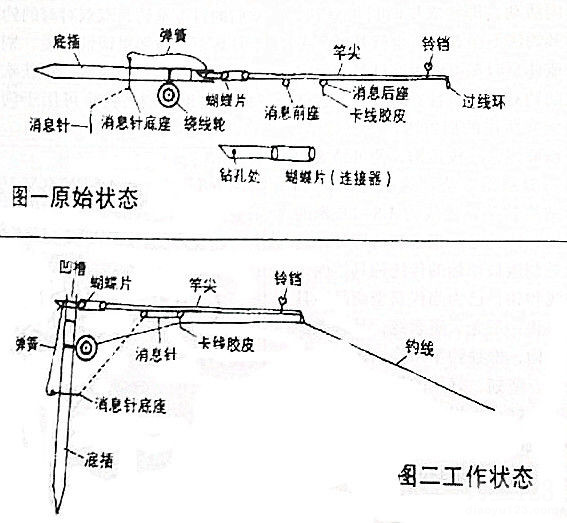
Let’s break down the science (it’s simpler than it sounds!). When the spring rod is set up, the line is tight and locked in the rubber clip. When a fish swallows the bait and pulls the line, a small pin slides out of its holder. The spring’s force then snaps the rod straight up, driving the hook into the fish’s mouth. If the fish is big, it might pull the rod back down, but the reel will let out line smoothly as the fish runs—no tangles, no stress!
6. Fighting the Fish: The Most Critical Step
Catching the fish is one thing; keeping it is another. Here are the 3 golden rules for fighting fish:
- Don’t Yank Hard: Pulling too hard can make the fish jump out of the water and escape.
- Keep the Line Tight (But Slow): Always maintain tension on the line, but don’t reel too fast. Let the fish tire itself out.
- Avoid Tangles: Lay the line on open ground, not on other rods. If it tangles, the fish will snap the line when it runs.
Final Thoughts: Why This Method Works
I’ve used this spring rod method for years, and it never disappoints. What I love most is that it’s low-maintenance—you can set up multiple rods and relax while waiting for bites. The key is to use fresh tender corn for hook bait and choose the right nest bait based on how long you plan to fish. Whether you’re a beginner or a seasoned angler, this method is worth a try.
So next time you head to a reservoir in Chongqing (or anywhere with similar conditions), give the spring rod method a go. You might just land the biggest fish of your life! And if you have any questions or want to share your own tips, drop a comment below—I’d love to hear from you.