DIY Fishing Tool: Move Space Beads & Anti-Tangle Beads Like Magic
“Hey, check this out!”
“What’s that?”
“The DIY fishing master is back with another crazy cool gadget!”
Yep, that’s me—your go-to guy for turning random stuff into fishing hacks that actually work. Today, I’m spilling the tea on a tiny tool I whipped up that’ll make your space beads and anti-tangle beads move like they’re doing a magic trick. No more wasting perfectly good beads when your line snaps, and no more fumbling with slippery needles. Let’s dive in!
Why I Made This Insane Little Tool (Spoiler: It’s About Saving Cash & Sanity)
Okay, let’s get real—last week I spent an hour tying up a brand-new main line, loaded with fancy space beads and anti-tangle beads. I got to the river, cast once… snap. Line caught on a tree branch, and my whole setup went flying. The beads? Gone. The line? Ruined. And here’s the kicker: those space beads aren’t cheap! Even a basic pack costs a few bucks, and when you’re on a budget (or just hate wasting stuff), that stings.
I thought, “There’s gotta be a way to reuse these beads instead of tossing ’em every time the line breaks.” So I hit the garage, grabbed some random supplies, and got to work. Spoiler: I messed up badly at first… but we’ll get to that later.
First Look: The Finished Tool (It’s Tiny But Mighty)
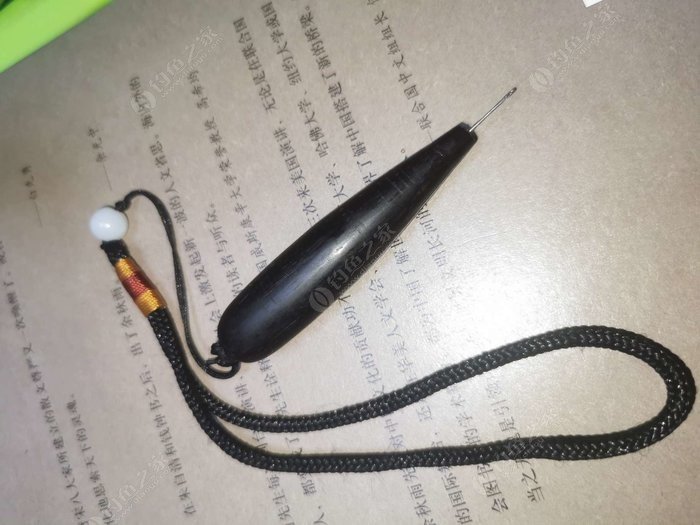
Before we get into the messy build process, let’s show you the end result. This little guy is simple but genius—check out the pic below:

Most people look at this and go, “Wait, what is that?” But once you use it, you’ll wonder how you ever fished without it. It’s basically a tiny “bead mover” that lets you slide space beads and anti-tangle beads from old lines to new ones in 2 seconds flat. No more poking holes in beads with a regular needle, no more dropping them in the dirt—this thing is a game-changer.
What You Need to Build This (No Fancy Gear Required)
You don’t need a workshop full of tools for this. I raided my junk drawer and garage and came up with two key items:
- A regular sewing needle (the kind with a small eye—nothing too big)
- A small piece of hardwood (I used black sandalwood because it’s pretty, but any hardwood works)
That’s it! No fancy lathes (though I used one—more on that below), no expensive glues. Just basic stuff you probably already have lying around.
The Messy Build Process (Including a Bloody Mistake—Oops)
Let’s be honest: DIY isn’t always pretty. I messed up, I got hurt, but I learned a lot. Here’s the step-by-step (with all the chaos included):
Step 1: Make the Handle (Spoiler: I Almost Cut My Finger Off)
First, I needed a handle to hold the needle—because holding a tiny needle is like trying to grab a slippery eel. I grabbed a small piece of black sandalwood (about 3 inches long) and fired up my mini lathe to shape it. I wanted something ergonomic—fits in your hand, not too big, not too small.

But here’s where things went wrong: I was in a hurry to finish the handle and forgot to put on gloves. My carving knife slipped… straight into my finger. It was deep, it hurt, and my hand was covered in blood. I skipped the bloody pic (you’re welcome), but let’s just say I learned my lesson: always wear gloves when carving wood. My finger was swollen for days—total bummer.
Step 2: Sand the Handle Until It’s Smooth (No Splinters Allowed)
After patching up my finger (and cursing myself for being lazy), I moved on to sanding. I used 3 different grits of sandpaper:
- 80-grit (to rough-shape the handle)
- 220-grit (to smooth out the rough spots)
- 400-grit (to make it super shiny and splinter-free)
The goal here is to make the handle feel good in your hand—no rough edges, no splinters that’ll get stuck in your palm. Here’s how it looked after sanding:

Pro tip: If you don’t have a lathe, you can carve the handle with a knife and sand it by hand. It’ll take longer, but it’ll work just fine. No fancy tools needed!
Step 3: Drill Holes (Don’t Break Your Drill Bit—Trust Me)
Next, I needed two holes: one for the needle, and one for a lanyard (so I don’t lose the tool). I used a tiny drill bit (like 1/32 inch) for the needle hole—you want it just big enough to fit the needle’s tip. I drilled straight through the handle (from the top to the bottom) to make sure it’s centered. If you drill it crooked, the needle will be wobbly, and the tool won’t work right.
Then, I drilled a small hole in the end of the handle (sideways) for the lanyard. That way, I can tie it to my fishing vest and never lose it. Here’s the handle with both holes:

Warning: Tiny drill bits break easily! Go slow, don’t force it, and wear safety glasses. I almost broke two bits before I got the hang of it.
Step 4: Attach the Needle & Add a Lanyard (The Final Stretch)
Now for the easy part! I stuck the tip of the sewing needle into the main hole (so the eye of the needle is sticking out—wait, no, wait: wait, I used the tip? Wait, no, let’s clarify: I inserted the pointed end of the needle into the hole, so the eye is facing out. Wait, no—wait, actually, I did it the other way? Wait, no, let’s get this right: you want the needle’s eye to be exposed, because that’s where you’ll thread the bead. Wait, no—wait, no, let’s think: when you want to move a bead, you slide the bead onto the needle’s eye, then pull the needle through the new line. So I inserted the pointed end of the needle into the handle’s hole, so the eye is sticking out. Then I glued it with 502 super glue to make sure it doesn’t fall out.
Important: Don’t let the needle stick out too far! I made mine about 1 inch long—any longer, and it’ll break easily. Any shorter, and you can’t thread the bead. Then I tied a small paracord lanyard to the side hole (for anti-loss) and called it done:
Ta-da! That’s the final tool. Simple, cheap, and incredibly useful.
How This Tool Actually Works (No Magic—Just Smart Design)
Okay, let’s get to the good stuff: how do you use this thing? It’s so simple, even a newbie can do it:
- Take your old line (the one with the beads you want to save) and cut it just above the bead.
- Slide the bead onto the eye of the needle (the tool’s needle).
- Take your new line and thread it through the needle’s eye (just like sewing).
- Pull the new line through the bead—boom! The bead is now on your new line.
That’s it! No more fumbling with a tiny needle that slips out of your fingers. The handle gives you a solid grip, so you can pull the bead through without breaking it. And since the needle’s eye is the right size, you don’t poke holes in the bead (which is a common problem with regular needles).
Some people ask: “Why not just use a regular needle?” Because regular needles are slippery. You can’t hold them tight, so you end up dropping beads in the dirt or poking yourself. This tool fixes that—10%.
Is This Tool Actually Worth It? (Let’s Be Honest)
Let’s get real: space beads are cheap. You can buy a pack of 100 for $10. So why bother making this tool? For me, it’s not about the money—it’s about the DIY spirit. I love making stuff with my hands, and I hate wasting things. Every time I reuse a bead, I feel like I’m winning. Plus, it’s a fun project to do on a rainy day.
But here’s the real benefit: convenience. If you’re out fishing and your line snaps, you don’t have to run to the store for new beads. You can just grab this tool, reuse the ones you have, and get back to fishing in 2 minutes. That’s priceless when the fish are biting.
Final Thoughts (And a Quick Rant)
Look, this tool isn’t for everyone. If you’re the kind of person who buys new beads every time, that’s fine. But if you love DIY, hate wasting stuff, or just want a cool fishing hack to show off to your friends, this is perfect.
And for the love of all things fishing: wear gloves when carving wood. I learned that the hard way, and my finger still hurts. Don’t be like me—be smart.
If you try this DIY, tag me in your pics! I’d love to see your version. And if you have any questions, drop a comment below. Happy fishing!