My Float Collection: No Fancy Gear, Just Practical Picks
Hey fellow anglers! Today I skipped fishing to recharge for tomorrow’s battle-gotta stick to my daily post habit, right? Let’s chat about fishing floats, something I’ve learned a ton about through trial and error (mostly error at first, let’s be real).
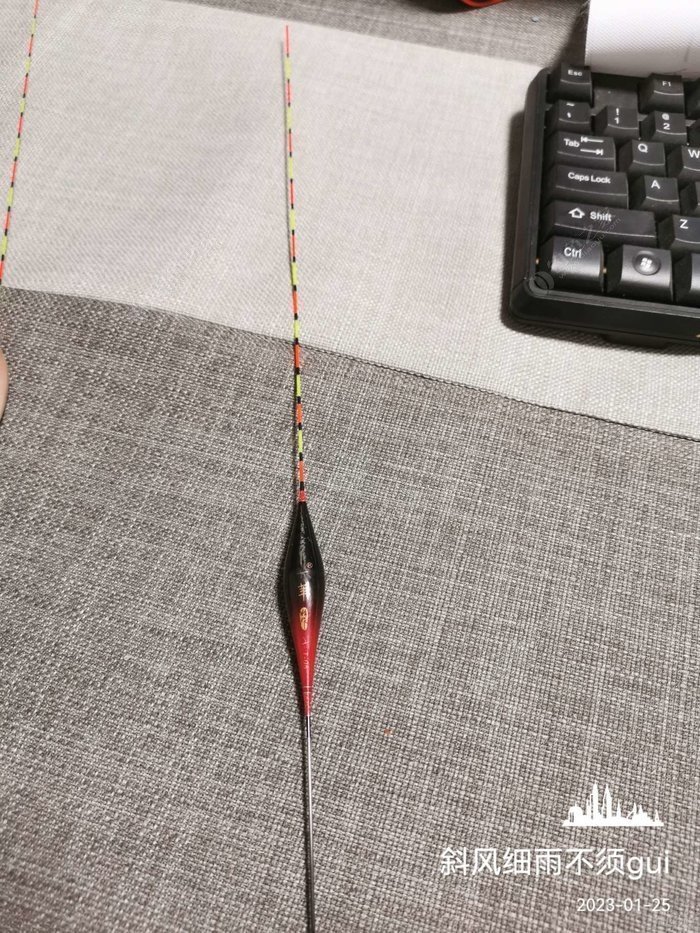
I’m a wild fishing guy 90% of the time, with occasional black pit detours. So I don’t splurge on super pricey floats-most are $3-$5, with a couple hitting $7 max. Wait, scratch that-my fanciest ones are two “Yi Wei” floats that came free with my “Zhu Lu Ji” rod. Those are my babies, no joke! I use them mostly for 5.4m or 6.3m rods, with 2.4-2.8g weight capacity-perfect for wild waters.

These two are my top-tier floats now. I swear, they’ve helped me land way more bottom fish than my cheapo ones-proof you don’t need to drop $50 on a float to catch fish, but freebies from good rods? Total win.
Wild Fishing Fish Species: Who Are We Targeting?
Let’s get real-when we start wild fishing, we’re happy with any catch: tiny whitebait, random minnows, whatever bites. But as we get hooked (pun intended), we pick target species. Most of us end up chasing bottom dwellers: crucian carp, common carp, black carp-you know, the ones that fight back. Surface fish like whitebait, blue knife, and silver carp are fun too, but they’re more of a side show for me now.
Here’s the struggle: small trash fish love stealing bait before it hits the bottom. At first, I thought “just use a big lead sinker!”-but that’s too simple. The float is your eyes, people! You can’t ignore it if you want to stop feeding the minnows and start catching real fish.
Why Floats Matter for Avoiding Trash Fish
Trash fish are the bane of every wild angler’s existence. They swarm your bait the second it hits the water, leaving nothing for your target carp. So how do we beat them? Fast-dropping bait is key-but bait texture (soft/sticky vs. hard) isn’t the only fix. Your float is a game-changer here.
To get bait to the bottom fast, you need a float that turns over quickly and has a slightly larger weight capacity. Let’s break down float structure: float foot, float body, float tail. A pro once told me the ideal ratio for quick turnover is 2 (foot) : 3 (body) : 5 (tail)-he taught me this when we fished for yellowtail, and I’ve sworn by it ever since.
- Short float foot: Less resistance in water = faster turnover.
- Longer float body: Adds stability and helps the float settle fast.
- Long float tail: Keeps the float upright longer once it turns over.
My Yi Wei floats aren’t exactly 2:3:5, but they’re close-and they turn over way faster than my 1:1:1 cheap floats. No more watching my bait get nibbled to bits mid-fall!
Choosing Floats for Different Wild Fishing Scenarios
Not all days on the water are the same-wind, current, water depth, target fish… they all change. So your float should too! Let’s break down what works when:
Scenario 1: Chasing Bottom Fish (Avoiding Trash Fish)
Bottom fish are my main squeeze, so this is my go-to setup. For this:
- Quick turnover float: Short foot + long body + long tail (aim for 2:3:5 ratio).
- Slightly larger weight capacity: 1.8-3g (adjust based on water depth-deeper water needs more weight).
Pro tip: Pair this with soft/sticky bait. The float gets the bait down fast, and the bait stays on long enough for carp to find it-no more trash fish stealing half your bait before it’s 1ft deep.
Scenario 2: Winter Fishing (Slower, Colder Waters)
Winter fishing is brutal-fish are lazy, so they don’t chase bait. I switch to slow-turnover floats here, with weight under 1.5g. Why? Because slower turnover means the bait falls slowly through the water column, giving those sleepy carp time to notice and bite.

These floats look similar, but their weight capacities range from 0.8g to 1.4g. Last winter, I used the 1.2g one in a frozen lake and caught 12 crucian carp in 3 hours-my personal best! If I’d used my fast-turnover float, the bait would’ve hit the bottom too fast, and the carp wouldn’t have bothered.
Scenario 3: Windy Days or Slight Current
Wind = float chaos. Your line drifts, your float tilts-total nightmare. Solution? Same float type, but bigger weight capacity. For example, if I use a 1.8g float on calm days, I bump it to 2.5g on windy ones. The extra weight keeps the float stable, so I can still see bites clearly.
Slight current? Same logic. A heavier float doesn’t get swept away as easily. I learned this the hard way: once I used a 1.2g float in a slow-moving river, and my line drifted 10ft downstream before I noticed. Switched to 2g, and suddenly I could track every nibble.
Scenario 4: Deep Water Fishing (5m+)
Deep water means your bait takes forever to reach the bottom-more time for trash fish to attack. So you need a float with larger weight capacity (3g+) to speed up the drop. My Yi Wei floats (2.4-2.8g) are perfect for 5-6m depths. Last month, I fished a 6m deep pond with them, and my bait hit the bottom in 8 seconds-no trash fish stole it! I caught 3 carp that day-score.
Do You Need Multiple Floats of the Same Type?
Once, I thought: “Why buy 3 identical floats with different weights? Just adjust the lead!” Oh, how naive I was. Different weights for the same float type make a huge difference in fish catch rates.

Take these three-same shape, but 1.2g, 1.8g, and 2.5g. Here’s how I use them:
- 1.2g: Winter or super shallow water (1-2m).
- 1.8g: Calm spring days, 3-4m depth.
- 2.5g: Windy summer days, 5m+ depth.
Last week, I tested the 1.8g vs. 2.5g in the same 4m deep spot on a windy day. The 1.8g float drifted nonstop, and I caught 2 small carp. Switched to 2.5g, and I landed 5-including a 2kg common carp! The difference was night and day.
Final Thoughts (From a Casual Angler)
Okay, I know I rambled a lot-but that’s because I’m passionate about this! You don’t need a closet full of floats to be a good wild angler. For casual fishing, 3-5 floats cover all scenarios: a quick-turnover one for bottom fish, a slow one for winter, and a heavy one for wind/current.
I’m still learning too-last month, I messed up and used a 2.8g float in 1m shallow water, and my bait sank so fast I missed all the crucian carp bites. Oops. But that’s part of the fun! Fishing is all about trial and error, and floats are just one piece of the puzzle.
So next time you’re at the tackle shop, don’t grab the first cheap float you see. Think: “What fish am I chasing? What’s the water like?” Your catch rate will thank you. And if you get a free float with a rod? Hold onto it-you never know, it might become your new favorite.
Any float hacks I missed? Drop a comment below-I’m always down to learn from my fellow anglers. Tight lines, everyone!