Fishing in Moving Water or High Winds: Tips for Bank Anglers to Catch More Fish
Let’s be real—there’s nothing worse than showing up to your favorite fishing spot, only to find the wind howling so hard it feels like your hat’s gonna fly off, and the water’s moving faster than a kid chasing an ice cream truck. I’ve been there, staring at my bobber bobbing like a cork in a hurricane, thinking, “Is today just a total wash?” But here’s the thing: moving water and wind don’t have to be enemies. With the right tricks, you can turn these “bad” conditions into fish magnets. Let’s break down everything I’ve learned (the hard way) about fishing when the water’s moving or the wind’s cranking.
Why Wind & Moving Water Suck (But Also Secretly Rule)
First, let’s vent about the obvious frustrations:
– Bobbers that won’t stay upright? Check.
– Hooks drifting into snags every 2 seconds? Double check.
– Trying to cast against a gale and ending up with your line in a tree? Triple check.
But here’s the hidden upside: moving water oxygenates the water (fish love that!), and wind pushes baitfish around, making big predators hungry. So instead of packing up, let’s work with the chaos.
Two Go-To Tactics for Windy/Moving Water
When the water’s moving fast or the wind’s brutal, I swear by two tactics. They’re not fancy, but they work—especially when everything else is failing.
Tactic 1: The “Big Run” (aka “Big Slider”) Rig
Okay, let’s get technical (but not too technical). The “run” rig (or “slider” rig, as some call it) is when you let your weight slide freely on the main line. Why? Because it keeps your bait on the bottom without getting stuck. Here’s how I set it up:
– Step 1: Use a heavier weight than you normally would. I’m talking 10–15 grams (or more, if the current’s insane). This keeps the rig planted on the bottom.
– Step 2: Tie a small swivel to the end of your main line. Then attach a 30–40 cm leader (I use fluorocarbon for invisibility).
– Step 3: The weight slides above the swivel. So when a fish picks up the bait, the weight doesn’t drag—you’ll see a clear “bite” signal.
Pro tip: This rig is perfect for slow-moving currents (like a lazy river or wind-driven chop). I usually fish it with a single hook and a worm or corn—simple, but deadly.
Tactic 2: The “Drift” Rig (My Go-To for Fast Water)
When the current’s so fast it feels like the water’s running downhill? The drift rig is your BFF. This is for when the “run” rig just can’t keep up. Here’s the tea:
– When to use it: Rivers, spillways, or any water moving faster than 0.5 m/s (you can guess that by how fast your bobber zips away).
– The vibe: You let the current carry your bait downstream, and you watch your rod tip for bites. No bobber—just the rod tip. It’s all about feeling the “pull.”
Step-by-Step: How to Rig & Fish the Drift Rig (Like a Pro)
Let’s walk through this step by step. I’ve messed up every part of this, so you don’t have to.
Step 1: Measure the Depth (No Guesswork Allowed)
First, you need to know how deep the water is. Here’s my lazy hack:
– Tie a heavy rock (or a big sinker) to your line.
– Cast it out, let it hit the bottom, then reel in slowly.
– Mark the line where it meets the water’s surface. That’s your depth.
Why? Because if your bait’s too high, it’ll drift too fast. Too low, and it’ll get stuck on rocks. Get this right, and you’re 50% there.
Step 2: Rig the Weight (Don’t Overdo It)
The weight’s job is to keep your bait just off the bottom. Here’s the sweet spot:
– When you cast, the line should make a 45–55° angle with the water. If it’s too steep (like 90°), your weight’s too heavy. If it’s flat (like 0°), it’s too light.
– Leader length: Keep it short (10–15 cm). Long leaders get tangled in fast water.
– Hook choice: Single hook only! Double hooks = disaster (trust me, I’ve spent 20 minutes untangling them). Avoid braided line for leaders—it’s too soft and tangles easily. Use fluorocarbon or monofilament.
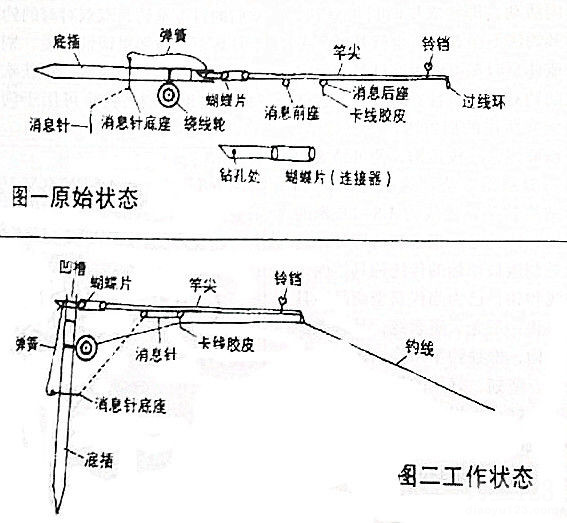
Step 3: Set Up Your Rod (Soft Tip = Better Bites)
You don’t need a fancy rod for this—any rod with a soft, flexible tip works. Here’s how to set it up:
– Rod angle: Hold the rod at 45° to the water (like you’re holding a shotgun). This lets you feel even the tiniest bites.
– Night fishing hack: Tape a glow stick to the rod tip. Game changer. I’ve caught more catfish at night with this trick than I can count.
Step 4: Bait & Cast (Keep It Simple)
Fast water fish are hungry—they don’t have time to mess around. Here’s what works:
– Best baits: Worms, corn, shrimp, or small minnows.
– Pro move: Use baits that stay on the hook. Fast water washes away flimsy bait fast. I love using “power bait” worms—they’re tough and stinky (fish go crazy for that).
Cast upstream, then let the current carry your bait downstream. Keep the line tight enough to feel the bait, but not so tight that it pulls the rod out of your hand.
Step 5: Watch the Rod Tip (The Only “Bobber” You Need)
This is the fun part. Here’s what to look for:
– Small taps: Probably a small fish (like a bluegill) or debris. Ignore it.
– Big pull: That’s a keeper! When the rod tip bends down hard, yank back to set the hook.
– Pro tip: Keep a “hand line” (a short piece of rope tied to your rod) handy. If a big fish pulls your rod in, you can grab the rope and fight it without losing your gear. I’ve saved 3 rods this way—no joke.
Drift Rig Pro Tips: How to Catch More Fish
Let’s wrap this up with my best secrets for drift fishing:
- Cast upstream, not across: This lets your bait drift naturally with the current. Casting across creates a “drag” that pulls the bait up.
- Don’t reel too fast: Let the current do the work. If you reel too fast, you’ll pull the bait out of the strike zone.
- Change baits often: Fast water washes away scent. Swap out your bait every 10–15 minutes to keep it fresh.
- Look for “seams”: Seams are where fast water meets slow water (like behind a rock or near the bank). Fish love these spots—they’re like fast food joints for them.
My Personal Story: The Day the Wind Saved My Trip
Last summer, I went to a local river that’s usually calm. But when I got there, the wind was blowing so hard it felt like a tornado. I was ready to pack up—until I remembered the drift rig. I rigged it up, cast upstream, and within 5 minutes, my rod tip bent over like a banana. I fought a 10-pound catfish for 10 minutes (my arms were killing me!), but it was worth it. That day, I caught 3 catfish and 2 bass—all because I didn’t give up when the wind was bad.
So next time the wind’s howling or the water’s moving fast, don’t throw in the towel. Grab your drift rig (or run rig) and give it a shot. You might be surprised at what you catch.
What’s your go-to tactic for windy/moving water? Drop a comment below—I’d love to hear your tricks!