How to Make and Use Sweet Potato Fishing Bait That Fish Actually Love
Let’s be real—how many times have you spent hours prepping fancy store-bought bait, only to watch fish swim right past it? I’ve been there, staring at my tackle box like, “What gives?!” Then a old-timer at my local lake dropped a truth bomb: “Stop overcomplicating it. Use sweet potatoes.” At first, I thought he was nuts. But after testing this stuff, I’m never going back. Today, I’m spilling everything you need to know to make and use sweet potato bait that’ll have bass, carp, and catfish fighting over your line. Spoiler: It’s cheaper, easier, and way more effective than most of the junk at the bait shop.
Why Sweet Potatoes Are the Ultimate Fishing Bait (No, Really)
Before we dive into the how-to, let’s talk why sweet potatoes work so well. First off, they’re natural. Fish don’t want neon pink “super attractant” goop—they want something that smells and tastes like what they eat in the wild. Sweet potatoes are packed with sugars and starches that release slowly in water, drawing fish from yards away. Plus, they’re super durable. You won’t be retying bait every 10 minutes because a minnow nibbled it off. And let’s not forget the color: that warm orange hue stands out in murky water, so fish can spot it easy.
Oh, and the best part? It’s not just for one type of fish. I’ve caught everything from tiny bluegill to monster channel catfish with sweet potato bait. Carp? Obsessed. Bass? Will smash it if you present it right. Even trout (yes, trout) will go for it in slow-moving streams. It’s like a universal fish magnet—who knew?
Step 1: Pick the Right Sweet Potato (This Matters More Than You Think)
Not all sweet potatoes are created equal. I learned this the hard way when I grabbed a random one from the grocery store and my bait turned into mushy garbage. Here’s what to look for:
Types of Sweet Potatoes for Fishing
- Orange-fleshed (Yams, technically, but let’s not split hairs): These are the golden ticket. They have the highest sugar content, so they smell and taste sweeter. Cooked right, they’re sticky enough to stay on your hook but soft enough for fish to bite.
- Yellow-fleshed: Good, but not as sweet. Great if you’re targeting smaller fish like bluegill or sunfish.
- White-fleshed: Avoid these. They’re less sweet and fall apart easier in water. Save ’em for baking, not fishing.
Pro Tips for Selecting the Perfect Tater
- Go for firm, unbruised ones. Soft spots mean rot, which will make your bait smell bad (and not in a good fish-attracting way).
- Skip the “sprouted” ones. Those have less sugar and more starch—fish won’t care as much.
- Let them cure for a week or two before using. Wait, what? Yep! Storing sweet potatoes in a cool, dark place (like your garage) lets their starches turn into sugars. So they’ll be way sweeter when you cook ’em. Trust me, this tiny step makes a huge difference.
Step 2: Cook the Sweet Potato (Don’t Overdo It—This Is Critical)
Okay, so you’ve got your perfect sweet potato. Now what? The key here is not to overcook it. If it’s mushy, it’ll fall off the hook. If it’s undercooked, fish won’t bite it. Here’s my foolproof method:
How to Cook Sweet Potato Bait
- Wash the sweet potato thoroughly—you don’t need to peel it (the skin adds extra durability!).
- Cut it into 1-2 inch chunks. Smaller chunks are better for tiny fish; bigger ones for big cats or carp.
- Boil or steam it until it’s tender but firm. Poke it with a fork—if it goes in easy but doesn’t squish, it’s perfect. Do not boil it for more than 10-12 minutes. I’ve made that mistake, and my bait turned into sweet potato soup. Not helpful.
- Drain it and let it cool completely. Hot bait will melt on your hook, and you’ll burn your fingers. Wait 30 minutes—patience, grasshopper.
Optional: Add a little extra flavor? I sometimes mix in a tiny bit of vanilla extract or honey before letting it cool. Fish go crazy for that sweet, nutty vanilla smell. Just don’t overdo it—1 teaspoon per 2 sweet potatoes is enough. Too much honey will make the bait sticky and hard to handle.
Step 3: Hook It Like a Pro (So It Stays On)
Even the best bait is useless if it falls off the hook the second you cast. Here’s how to hook sweet potato bait so it stays put:
Hook Size Matters
- Small hooks (size 8-10): For bluegill, sunfish, or small bass. Use tiny 1-inch chunks.
- Medium hooks (size 4-6): For catfish, carp, or medium bass. Use 1.5-inch chunks.
- Large hooks (size 2-4/0): For monster catfish or carp. Use 2-inch chunks (or even half a small sweet potato).
Hook It Right
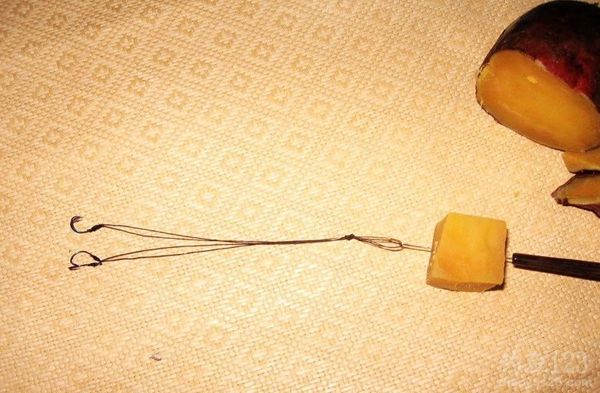
Push the hook through the center of the sweet potato chunk, then twist it slightly so the skin wraps around the hook. Make sure the point is exposed—if it’s covered, fish might just nibble the bait without getting hooked. For bigger chunks, I’ll push the hook through twice (like threading a needle) to make extra sure it stays on. Test it by casting a few times—if it flies off, you need a bigger chunk or a tighter hook set.
Step 4: Use It as Bait or Chum (Yes, Both!)
Sweet potatoes aren’t just for hooks—they’re amazing chum too. Chumming is when you throw small bits of bait into the water to draw fish to your spot. Here’s how to do it:
Chumming with Sweet Potatoes
Cut up 3-4 sweet potatoes into 1-inch chunks (same as your bait) and throw them into the water 10-15 minutes before you start fishing. Throw them in a 5-foot circle around your spot—this creates a “feeding zone” that fish can’t resist. If you’re fishing in a lake or river, throw a handful every hour to keep the fish hanging around. I’ve had days where I didn’t catch anything until I chummed—then the bite was nonstop.
Fishing with Sweet Potato Bait
Once you’ve chummed, cast your line with the sweet potato bait into the middle of the chum zone. Let it sink to the bottom (for bottom-feeding fish like catfish or carp) or let it float a few feet down (for bass or trout). Be patient—fish might take 5-10 minutes to find it. When you feel a tug, don’t yank the line right away! Let the fish take the bait for 2-3 seconds, then set the hook with a slow, steady pull. I’ve missed so many bites by yanking too fast—trust me, this works.

Pro Tips to Make Your Sweet Potato Bait Even Better
Want to take your bait to the next level? Try these hacks:
1. Freeze It (Yes, Really)
Freezing sweet potato bait makes it more porous, which means it releases more scent into the water. Cook the bait, let it cool, then put it in a freezer bag and freeze for 24 hours. Thaw it before using— it’ll be softer but still durable. I do this every time now, and the fish seem to find it faster.
2. Add Garlic (Fish Love It)
Garlic is a fish attractant superfood. Crush a clove of garlic and mix it into your sweet potato chunks before cooking (or after, if you’re feeling lazy). The strong garlic smell cuts through murky water and draws fish from far away. Just don’t add too much—1 clove per 2 sweet potatoes is enough. Too much garlic will make the bait taste bitter.
3. Use It in Different Water Conditions
Sweet potatoes work in almost any water, but here’s how to adjust:
- Murky water: Use orange-fleshed sweet potatoes—their bright color stands out more.
- Cold water: Fish are less active, so use smaller chunks and chum more often. The extra scent will wake them up.
- Fast-moving water: Use bigger chunks and hook them extra tight— the current will wash away small bait fast.
My Personal Story: The Day I Caught a 20-Pound Catfish with Sweet Potato Bait
Let me tell you about the time I proved this bait works. Last summer, I was fishing at my local lake for catfish. I’d tried everything: store-bought stink bait, worms, even chicken liver. Nothing. Then I remembered the old-timer’s advice and ran to the grocery store for a sweet potato. I cooked it up, chummed the spot, and cast my line. 10 minutes later, my rod bent all the way over. I fought that catfish for 15 minutes—my arms were shaking, my hands were sweaty, but I finally reeled it in. It was 20 pounds! The guy next to me was using fancy store-bought bait and didn’t catch a thing. He asked me what I was using, and when I said “sweet potato,” he looked at me like I was crazy. Then he ran to the store too. Classic.
Since then, I’ve used sweet potato bait every time I go fishing. I’ve caught bass, carp, bluegill, and even a few trout. It’s not just effective—it’s fun! There’s something satisfying about making your own bait and watching fish go crazy for it. Plus, it’s way cheaper than store-bought stuff. A $2 sweet potato will make enough bait for 5+ fishing trips. That’s a steal.
Wrapping Up (But Not Really—Go Try It!)
So there you have it: everything you need to know to make and use sweet potato fishing bait that fish actually love. It’s easy, cheap, and way more effective than most of the junk at the bait shop. Stop overcomplicating your fishing—give sweet potatoes a try. I promise you won’t regret it.
Next time you’re heading to the lake, grab a sweet potato, cook it up, and let me know how it goes. Tag me in your fishing photos— I’d love to see the monsters you catch. Tight lines, everyone!