Ultimate Guide to Fishing at Wuqiangxi Reservoir in Hunan: Tips, Tactics, and Real Experiences
Let’s cut to the chase—if you’re a angler chasing big fish in stunning waters, Wuqiangxi Reservoir in Hunan, China, is a bucket-list spot. I’ve spent weeks here, and trust me, this place isn’t just pretty—it’s a fish magnet. First, a quick lowdown: it’s on the Yuan River, one of Hunan’s four major waterways (and the least polluted, thank goodness). Stretching 80km from Yuanling County to the Wuxiangxi Dam, the water’s deep, currents are tricky, and the fish? Oh man, they’re huge. I’ve seen guys land 30-pounders here—no joke. But nailing a catch? It’s all about knowing the right methods for the right conditions. Let’s dive in.
1. Fishing Methods for Non-Flood Seasons: Slack Currents, Half-Water, and Bottom Fishing
Non-flood season (usually late spring to early winter) is when the water calms down a bit—perfect for testing both half-water and bottom tactics. But here’s the thing: the reservoir’s currents never fully disappear, so you’ve got to adapt. I’ve split this into two main spots: fishing on fish cages (the big ones where locals farm fish) and shore fishing. Both work, but they need totally different gear and tricks.
1.1 Fishing on Fish Cages: The Hot Spot for Big Catches
Fish cages are like fast-food joints for wild fish—they’re drawn to the leftover feed. But don’t just cast anywhere; you’ve got to follow the rules (more on that later) and use the right setup. Here’s what I’ve learned:
1.1.1 Gear Setup: Rods, Lines, and Sensitivity
First, rods: go for 1.2–3.6m raft rods or light boat rods. Why? They’re short enough to maneuver on cages, and long enough to cast into deep water. Now, lines—here’s a pro tip: use thin lines. I’ve used 1.2lb test (yes, 1.2!) to land a 25lb catfish. Wait, how? Because the reservoir’s deep, thin lines have better sensitivity—you feel every tiny bite. Plus, most reels here have 150m of backing, so you can tire out big fish without breaking the line. Just make sure your rod’s line guides are big enough (small ones get stuck on swivels). If not? Swap ’em out—trust me, it’s worth it.
Next, floats vs. no floats: if the current’s slow (under 1m/s), use a float. It makes watching bites easier. If it’s fast? Ditch the float—hold the rod and watch the tip. A tiny twitch? That’s a fish nibbling. I’ve missed so many bites ignoring this—don’t be me.
1.1.2 Float Fishing for Bottom Bites (Slack Currents)
When the water’s barely moving, float fishing is your friend. But tuning the float? It’s a pain if you don’t know the trick. Here’s my step-by-step:
- Use a hollow float seat (not a solid one—more sensitivity).
- Tie an 8-ring swivel below it. Single hook is better than double—less tangles in fast water.
- Bait length: 10cm. Hook size: 3–5 for most fish (carp, bream), 9–12 for predators (snook, mandarin fish).
- Lead weight: 10–20g. Float: must hold at least 20g (heavy water needs heavy floats).
- Find the bottom: tie a 20g lead to your hook, cast it out. When it hits the bottom, mark the line at the water level with a thread. Slide your float’s space beans (those little rubber things) to that mark—boom, you’re on the bottom.
Wait, what about current? If it’s moving a bit, pull the space beans above the lead seat up 10–15cm. That way, the lead sits on the bottom, and the bait moves naturally with the current. Fish love that—they think it’s a wounded minnow.
1.1.3 Baiting Tactics: Don’t Just Throw It in!
Baiting is make-or-break here. I’ve seen guys throw whole rice cakes into the water and wonder why no fish come. Duh—they drift away in the current! Here’s the right way:
- For bottom bait: Tie a rice cake to a rope, lower it straight down to the bottom. Attach a 30cm weak plastic rope to the cake—when it hits the bottom, yank the rope hard to break it. Now the cake stays put, and fish can nibble it all day.
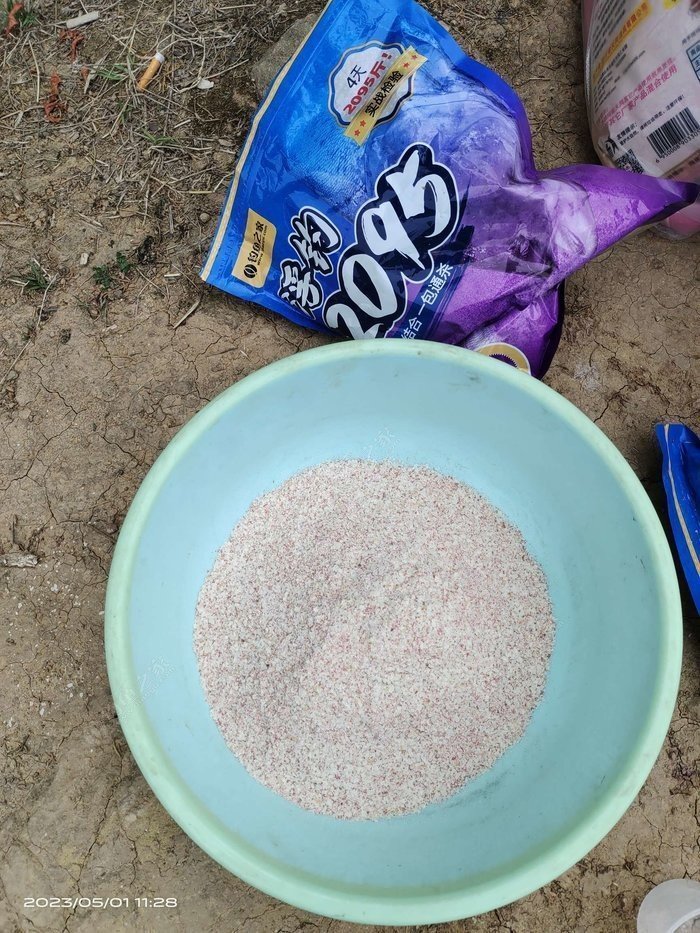
- For slack water: Use fish feed pellets (the same ones the cage owners use), rice mixed with bran, or fermented corn. These are what the wild fish eat every day—they’ll swarm to it.
- For half-water (fishing under the cages): Two tricks. 1) “Hand-feed” pellets—throw a handful every 10 minutes. When the cage owner feeds their fish? Throw even more—fish go crazy. 2) Use a mesh bag (like a fruit bag) with 3–5lbs of pellets. Hang it 5–8m deep. Every 15 minutes, shake the bag to let pellets leak out. Fish will hang around for hours.
1.1.4 The Best Baits for Every Fish
Wuqiangxi has everything: carp, bream, catfish, snook, even the rare mandarin fish. Here’s what works:
- Herbivores (carp, bream): Use cage feed pellets (tie a small piece with a rubber band from a bike tire—works like a charm) or fermented corn.
- Predators (snook, mandarin fish, catfish): Live shrimp, small minnows, or even leeches (wait, leeches? Yes! They’re stinky and tough—one leech can catch 7–8 catfish or yellow catfish. I’ve tried it—game changer).
- Avoiding trash fish? Use corn. Even predators like snook will eat it sometimes (weird, but true).
Pro tip: Watch the water. If you see a bunch of small fish darting away? That means a big predator (like a giant snakehead) is nearby. Switch to live bait immediately—you won’t regret it.
1.2 Shore Fishing: Long Rods and Stealth
Shore fishing is trickier—fish are skittish here. The water’s clear most of the time, so they can see you from a mile away. Here’s how to outsmart them:
1.2.1 Choose the Right Spot
Old river bends (the inside of the curve) are gold. Why? Currents slow down there, so food collects. Avoid shallow water—fish hide in deep spots (3–5m) during the day. Use long rods: 5.4m or 6.3m. Short rods? You’ll scare the fish before you cast.
1.2.2 Gear for Shore Fishing
Float or no float? If current’s slow, use a float. If fast? No float—watch the rod tip. Lead: 10–20g, hollow seat (so it slides with the current). Rod holder: Use a fixed one stuck in the ground. The ones on chairs? They wobble, and you’ll miss bites. I’ve had so many “false alarms” with chair holders—never again.
1.2.3 Baiting and Casting
Make your bait hard—add extra gluten (the sticky stuff in wheat) so it doesn’t fall apart in the current. Cast 4–6m in front of your spot (the current will carry the bait to the fish). Throw 10–15 big bait balls first (like a big marble) to make a “bait cloud.” Then keep casting every 5 minutes—fish will come to the food.
Watch the rod tip! A tiny twitch? That’s a bite. I’ve caught 10lb carp just by seeing a 1mm twitch. Use a soft rod (46-tone—meaning the tip bends first) for better sensitivity. Tie a small colored ring (red or yellow) to the tip—you’ll see twitches easier. And don’t forget a rod leash! I’ve had a 3lb catfish yank my rod into the water—lost it forever. Never again.
2. Flood Season & Fast Currents: Fish Cages Only (Shore is Impossible)
Flood season (summer) is when the current goes crazy—up to 5m/s. Shore fishing? Forget it. The water’s muddy, and fish move to the cages. Here’s how to fish then:
2.1 Baiting in Fast Currents
Current speed = baiting distance:
- 3m/s: Bait 4–5m upstream of your spot (current will carry it down to you).
- 5m/s: Bait 6–10m upstream—current’s strong, so you need more distance.
2.2 Gear Adjustments
No float—current’s too fast. Use a stiffer rod tip (so you can feel bites through the current). Lead: 20–30g, long hollow (1.5cm—stays on the bottom better). Bait length: 30–40cm (longer = more movement). Predators love live minnows here—they think it’s a easy meal. Herbivores? Use dough bait (sticky, so it doesn’t wash away).
2.3 Night Fishing in Floods
Night fishing is insane here. Use a bell or glow stick on the rod tip—you can’t see the water in the dark. I’ve caught 28lb catfish at 2:00—they come out to feed when it’s quiet. Just don’t go alone—safety first.
3. Rules & Safety: Don’t Be That Guy
Wuqiangxi is amazing, but you’ve got to follow the rules. Here’s what I’ve learned the hard way:
- Ask permission: If you’re fishing on someone’s cage, ask the owner first. I’ve seen guys get kicked off for not asking—rude, and you miss out on great spots.
- Take your trash: Don’t throw plastic or bait bags in the water. The locals hate it, and it kills the fish. I carry a small trash bag with me—easy.
- Safety first: Wear a life jacket. Even if you can swim—currents are strong. I’ve seen a guy get pulled under for 10 seconds—scared the life out of him. Also, go with a friend—no one wants to be stuck alone if something goes wrong.
- Keep small fish: Catch a tiny one? Let it go. I’ve released 20+ small carp—we need to keep the lake full for future anglers. Plus, it’s just good karma.
Last thing: Check the weather. Wuqiangxi has sudden storms—if the sky turns dark, get off the water. I’ve been caught in a rainstorm once—my rod got soaked, and I almost fell off the cage. Not fun.
So that’s it—my 2-week guide to Wuqiangxi. Is it easy? No. But is it worth it? 100%. I’ve caught more big fish here than anywhere else in China. Just remember: adapt to the current, use the right bait, and be nice to the locals. Next time you’re in Hunan? Skip the tourist spots—head to Wuqiangxi. You won’t forget it.