Back to the Spot Chasing Bigger Catches
Today I headed back to the downstream area of Xiaowei East Reservoir—the same place I caught tons of tiny crucian carp last time. Don’t get me wrong, hooking doubles left and right was a blast, but those little guys were so small they barely qualified as “fish”! I’d seen other anglers haul in decent-sized crucian carp and even carp here, so I couldn’t resist coming back to chase that big-fish feeling. No way I was leaving without giving it a shot!
The past couple days brought on-and-off rain, so there weren’t many anglers around. That meant I could pick any spot I wanted! I settled on a spot a bit deeper into the reeds near my old spot—current wasn’t too strong there, which seemed like a safe bet for targeting bigger fish.
Setting Up for Big Fish (Or So I Thought)
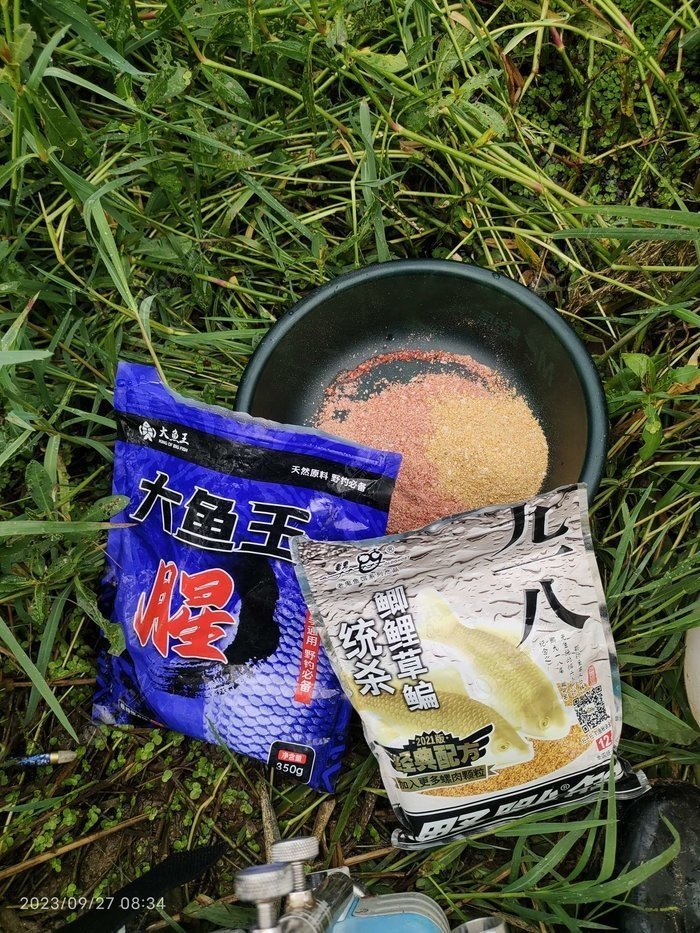
First order of business: crack open the tackle box and get set up. I popped open an umbrella to block the occasional drizzle, then mixed up my bait: Big Fish King’s fishy-scented formula plus 918 bait, tossed in some homemade rice wine pellets, and dripped a few drops of Fishing Home’s unreleased herbal wine. I rolled it into dough bait—this was for carp, no tiny fish allowed.

For my rod, I stuck with my 3.6m Wushuangli Collection rod, paired with a 1.5 main line + 0.8 leader + size 5 white sleeve hook setup. I used an extra-short float from Big Fish King and tied up ultra-short leader lines to fish a running lead setup—perfect for cutting through the light current.
Too Many Tiny Fish, Too Few Big Bites
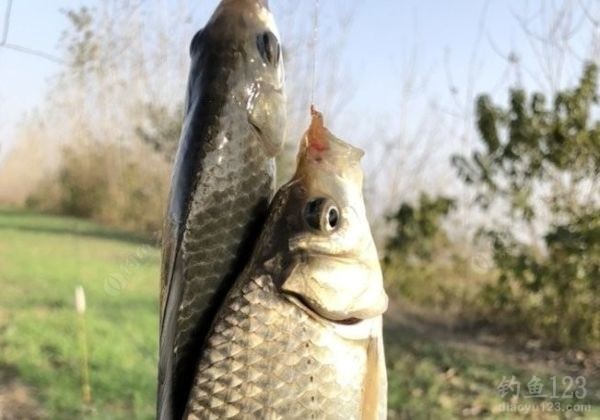
At first, the bite was nonstop… but it was all those tiny crucian carp again! The float bobbed and danced like it was at a party, and I’d hook one every now and then, but I missed way more than I landed. The good news? The few I did catch were bigger than last time’s batch, but that wasn’t what I was here for. I wanted a heavy, bending-rod kind of fight!
I wasn’t about to waste time on these little guys, so I quickly tied up a new leader: 1.0 main line + size 6 Izu hook, super short. I rolled bigger bait balls too, hoping to filter out those tiny nibbles. At first, it got quieter—finally! But those pesky little fish still wouldn’t leave me alone. They’d zoom in and steal bits of bait before any big fish could even notice it.
Surprise! A Catfish Takes the Bait
Just when I was starting to get frustrated, the float dropped hard—like, really hard—and then started dragging straight into the reeds. “This is it!” I thought, yanking the rod up as fast as I could. The rod bowed immediately, and that heavy, solid weight told me this wasn’t another tiny carp. I reeled steady, and suddenly a big black head popped out of the water with a splash, creating a huge vortex. It was a catfish! A decent-sized one too, by the look of it.

I’d been using a small bucket to hold any catches, but this guy was way too big for that—he jumped out three times before I even got him to the bank. Time to get the fish net out… but the reeds were so thick, I had to use a stick to poke a hole in the vegetation just to get the net in the water. The water was shallow there, so my new catfish friend kept thrashing around like he was protesting his new temporary home. Can’t blame him, honestly.
My Go-To Tips for Fishing in Moving Water
After dealing with the catfish chaos, I had some time to think about what works (and what doesn’t) when fishing in moving water. I’ve spent tons of days experimenting with setups here, so here’s what I’ve learned:
Line and Hook Setup for Current
Moving water changes everything about your setup. Normally, for small crucian carp (a couple ounces), I’d use a 0.6 main line + 0.3 leader + size 2 sleeve hook. But in current? Bump everything up a size: go with a 0.8 main line + 0.4 leader + size 3 sleeve hook, or even a 1.0 main line + 0.6 leader + size 3 Izu hook. Why? Because the current keeps your line tight—when you set the hook, it’s basically a tug-of-war right away, so you need line that can handle the pull.
Also, don’t use an ultra-stiff rod! Grab a soft carp rod or a small all-around rod. You need that flex to absorb the fish’s first run, otherwise you’ll snap your line before you even know what hit you. Trust me, I’ve been there.
- Up your line size by one step compared to still water
- Opt for a flexible rod to avoid line snaps
- Use barbed hooks if fishing extra tight—they hold better when fish pull hard
Bait Adjustments for Current
Bait is another thing you have to tweak for moving water. Today, the current was slow and water was shallow, so my regular dough bait worked fine. But if the current’s stronger or water’s deeper?
- Add more binder to your dough bait to keep it on the hook longer—nothing’s worse than watching your bait wash away mid-cast
- Switch to live bait like worms or corn, or hard pellets—they hold up better in fast water
- Roll bigger bait balls to target larger fish and make it harder for tiny fish to steal the whole thing
Reading the Float (Or Not)
When using a running lead setup, you don’t have to overthink the float! Any movement means a fish is biting—don’t wait for the “perfect” bite. Just yank that rod up! The common signals to look for are:
- Quick, shaky taps on the float
- A sharp, sudden drop
- The float getting pulled completely under the water
- The float popping up higher than its set depth (this one’s easy to miss—don’t ignore it!)
- The float sliding sideways across the surface
If the current’s so strong your float can’t stay upright at all? Ditch the float and go with the rod tip method. Tie your line so it’s tight against the rod tip, and watch for the tip to twitch or bend—any movement means a bite.

Leader Length Matters
Keep your leader short! I usually use leaders that are 7-8 cm long when folded over. Shorter leaders mean faster bite signals—you’ll feel the fish tugging almost immediately after it takes the bait. If you’re going for an extra-tight setup to target only big fish, you can go longer, but that’s a trade-off: you’ll miss more small bites, but when you do hook up, it’s likely a big one.
Today, I used my slightly stiffer 3.6m rod for a reason: the area was surrounded by reeds on both sides. A soft rod would’ve let that catfish dart into the reeds and break my line before I could reel it in. Stiffer rods let you control fish faster, which is a must when you’re fishing around obstacles.
There’s No One-Size-Fits-All Rule
Here’s the thing about moving water: every spot is different. The current speed, bottom structure, fish species, and even the weather can change what works. The tips I shared are what works for me, but they might not work for you—and that’s okay! Maybe you prefer a different float, or a different hook size, or even a completely different bait. We all cast differently, set the hook with different force, and even see float signals differently. The key is to experiment and adjust as you go. Fishing’s not about following a strict rulebook—it’s about finding what works for you on that specific day.
The Chaotic Reality of Wild Fishing
Wild fishing is all about the unknown. You might catch nothing but crucian carp all day, or hook a different species every cast. You might catch carp on topwater, or silver carp while fishing the bottom. I’ve caught bullhead on corn, mandarin fish on red worms, catfish on dough bait, and even topmouth culter in reed beds. Literally anything can happen— that’s part of the fun, right?

Today, I didn’t catch that carp I was chasing. Am I disappointed? A little. But honestly, catching that catfish made up for it. And let’s be real—catching big fish is mostly luck, right? Catching tiny fish is the norm, and going home empty-handed isn’t that unusual. If you want to catch more fish, there’s no secret trick—you just have to get out there and fish more often. No excuses!
My “Ideal” vs. the Brutal Reality of Fishing
Like every angler, I have this idealized vision of what fishing should be: I drive my car right to the water’s edge, the view is perfect with sky meeting calm water, I set up my umbrella neatly, arrange my tackle like a pro, find the bottom, mix bait, cast nonstop, take cool photos and videos, brag a little to my friends, release all my catches, and pack up all my trash before leaving. It’s all so clean and perfect!
But let’s be honest—here’s what usually happens: I carry my heavy tackle bag for 10+ minutes over rough terrain to get to the water, only to find the bank covered in other anglers’ trash. I spend 20 minutes picking the “perfect” setup, then realize tiny fish are stealing my bait before it even hits the bottom. I try every trick I’ve ever read to avoid them, and none work. I sit there smoking and grumbling, watching the sun go down, and then I have to take a close-up photo of the 3 tiny fish in my bucket just to have something to post. I swear I’ll never come back to this “dump”… then next weekend, I’m right back here because I can’t think of any other spots.
Ideal fishing is like a movie star—glamorous and polished. Real fishing? It’s messy, tiring, and often frustrating. But you know what? I wouldn’t trade it for anything. The one rule I always stick to, though: I always pack out all my trash. Keep the water clean for the next angler, and for the fish.

To all my fellow anglers: hope your days are full of tight lines, heavy rods, and memories that last longer than your fish stories. May your work go smoothly, your life be happy, and may every trip end with a net full of fish (or at least one surprise catfish!)