Ready to Win the Tournament? Here’s How to Ace Your Bait & Tackle Prep Before the Big Day!
Let me tell you, if you’ve ever stepped into a competitive fishing tournament feeling like a rookie—nervous, overpacked with gear, and *so* unsure if your bait is actually gonna work—you’re not alone. I’ve been there! Showed up to my first tournament with a tackle box full of “I think this will work” baits, fumbled through test casts, and ended up with zero fish (well, almost). Now? I’ve got a system, and I’m here to spill the tea on how to avoid my mistakes. Let’s dive in!

1. Bait Formula: Flavor First, But Consistency Counts Too
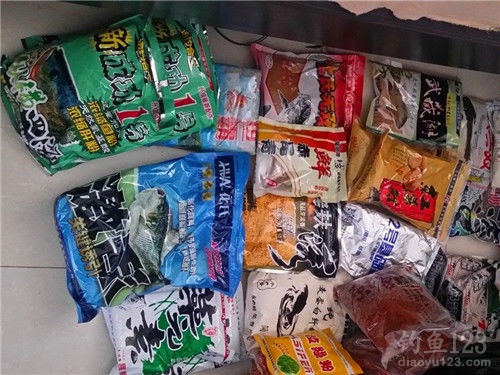
Let’s start with the bait—this is where most anglers go wrong, trust me. I once spent 30 minutes arguing with a tackle shop owner about whether “super sweet” was better than “sour-smoky.” Spoiler: it was neither. Why? Because I was testing *too many flavors* alone and mixing up which was which. Here’s the fix:
Team Up! You’re Not a Solo Pro
You can’t do this alone. I repeat: 3-5 anglers = magic. Some guys show up 10 days early to the lake just to scout, but if you’re solo, you’re missing half the intel. With a team:
- One mixes the bait (no more “wait, did I add water to the first one?” chaos!)
- Another focuses on casting (you know, the guy who’s always casting a perfect line without tangling? That’s your secret weapon)
- A third logs the results (write down which bait got 5 bites vs. 2—details matter!)
- You split the flavors! If you test 3 flavors, each person can do 2-3 variations, and in an hour, you’re done with 6 total. That’s way better than your 3-flavor solo mess.
Pro tip: Start with basics. The top 3 flavors to test are usually “Scented,” “Fresh,” and “Scented-Fresh” (you know, the classic combo). But wait—don’t just pick random ones. Check what the lake has been stocked with. If it’s spring and bass are biting on shad, skip the “vanilla” bait unless you’re going for a trick (and maybe you are, but stick to proven flavors first).
Track, But Don’t Overthink
After an hour of testing, tally up who has the most fish. But don’t throw out the “losers” right away! If your friend’s “Sour” bait got 2 bites and yours got 5, maybe their spot was better. Next time, mark the best spots and test the same flavor there. You’ll learn which bait works in which zone—and that’s where the magic happens for the tournament.
Also, remember: tournament day might have different water temps or fish mood. So the flavor you test now (in 70°F water) might need a tweak for 60°F conditions. Bring a small container of “adjusted” bait (like adding a dash of salt if it’s cold) and see if it helps! I once forgot this and lost 3rd place because I didn’t adjust for colder water. Ugh, rookie mistake.
2. Bait State: Size, Weight, and Leftover—The “Secret Sauce” of Your Cast
Okay, so your bait has the right flavor—but if it’s a blob that won’t stay on the hook or falls off 10 casts in, you’re dead. That’s where “bait state” comes in. Think of it like this: even the best cake recipe fails if you mess up the batter consistency. Your bait’s state (size, weight, how it stretches) is the same!
What “State” Even Means (and Why It Matters)
Bait state = how your bait behaves on the hook and under water. Let’s break it down:
- Size: If you’re using a 1cm chunk for small fish and a 2cm for big ones. Too big, and it’ll hang up on the bottom; too small, and it might not attract attention. Pro tip: Grab a ruler and measure your hook length! A 10mm hook should have a bait roughly ½ to ¾ the hook length.
- Weight: Ever watched a float go straight down instead of dallying? That’s your bait being too heavy. Light bait? It drifts off too fast. You need that perfect balance. For example, in still water, a float needs a lighter bait to stay suspended; in currents, heavier bait keeps it anchored.
- Leftover: No, not like leftover pizza. “Leftover” here is how much residue stays on your hook after casting. Too much residue, and the next cast might get snagged. Not enough, and your bait falls off! I once used a “super sticky” bait and ended up with tangles for days. Gross.
Wait, and don’t forget the “stretching powder” (that thing with gluten that makes your bait stay on the hook). If you use too much, your bait is stiff and doesn’t stick. Too little, and it falls apart. I made this mistake last season—used 3 scoops instead of 2, and my bait was rock-hard. No fish touched it. Never again!
Team Uniformity = Success
Here’s the pro move: one person mixes the entire batch of bait. Everyone else uses *exactly* the same mixture. No variations! If someone adds extra water, it’s like cheating. You need 100% consistency. Why? Because in tournaments, even a tiny difference in bait can flip the scoreboard. A team that tests together and uses the same bait? They win because they’ve got a solid foundation.
Another thing: use the same float for testing! If you switch floats between baits, you’re introducing bias. Use a fixed float, measure depth, and note the number of bites. This isn’t about “which float is better”—it’s about “which bait works with this float.”
3. Tackle Tweaks: Line, Hooks, and Floats—When Your Gear Is the Weak Link
Okay, so your bait is fire and your team is killing it—but if your tackle is garbage, you’re still losing. I’ve seen guys with the most “expensive” rods but 5lb line and size 10 hooks for tiny fish. Disaster! Let’s fix that.
Line, Hooks, and Float: The Trifecta
First, fish size dictates tackle. If you’re targeting small carp (500g max), go with a 0.2mm line and size 6 hooks. If you’re after big bass (1kg+), up to 0.4mm and size 4. But wait—tournament day is chaotic. Fish come in all sizes, so have backups! I once forgot extra hooks and spent 20 minutes tying one on during a match. Big mistake. Always have spares!
Pro tip for “fast fish” (you know, when they’re biting left and right): Use lighter line. A 0.2mm line on a 2.5g hook with 40cm leader? That’s perfect for speed. If fish are slow, add a bit of weight to the line (not too much!) to make it sink faster. But if you’re using “stretching powder” bait, your line needs to support the bait’s weight—so balance is key!
Float Adjustment: The Eyes of the Storm
Ever stare at your float, see nothing, and think “why?” It might be that your float is too big! If the fish are small (like 100g), a huge float (size 3) will block their view. Switch to a smaller float (size 1 or 2) and retest. You’ll see the tiny nibbles that were hiding before! I learned this the hard way—used a float so big, the fish couldn’t see the bait. Felt like fishing with a neon sign saying “I’m here!”
Also, check your “strike zone.” If your float is set at 4/5 (adjusted to hit bottom), make sure the bait is at the right depth. If it’s too deep, fish might not reach it. Test with different depths: 3m, 4m, 5m. The sweet spot is where the fish are swimming—you’ve gotta find that with your tackle.
Oh, and leader line! If you’re using leader line (the stuff between main line and hook), make sure it’s not too thick. 40cm leader is standard for shallow water, 50cm for deep. Thick leader = fish feel the line and bolt. Thin = too weak for big fish. Balance is everything!
Final Thoughts: Prep Smart, Fish Hard, and Enjoy the Ride!
So there you have it—my no-BS guide to prepping for a competitive fishing tournament. Remember: bait, state, tackle, and teamwork are your four pillars. No single pillar can carry the weight alone, but together? You’re unstoppable. Oh, and one last pro tip: record everything! Take photos of your bait, notes on hook sizes, and even a quick video of the fish you caught. You’ll learn more from that than any guidebook.
And hey, if you mess up? It’s okay! I’ve had days where my bait was bad, my tackle was wrong, and I still ended up with a laugh. Fishing is about learning, not perfection. So gear up, form that team, and go out there. Win or lose, you’ll be better next time. Happy fishing, and may your hook never get tangled again! 🎣
competitive fishing competition preparation, bait formula for fishing competition, fishing tackle setup before tournament, black pit fishing bait prep, fishing float adjustment tips, competitive fishing team tactics, fishing hook size for tournament, bait consistency for fishing, fishing line diameter guide, competitive fishing bait state, tournament fishing gear checklist, fishing tackle vs bait ratio, fast fishing techniques, fishing rod and reel setup, fishing bait mixing tips