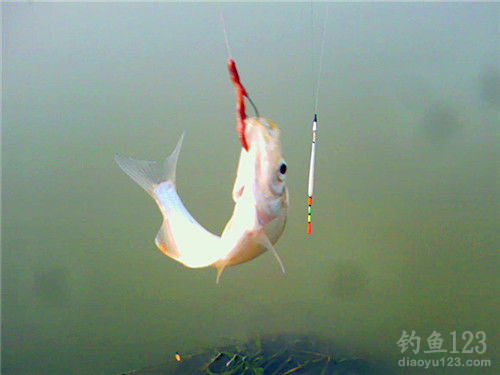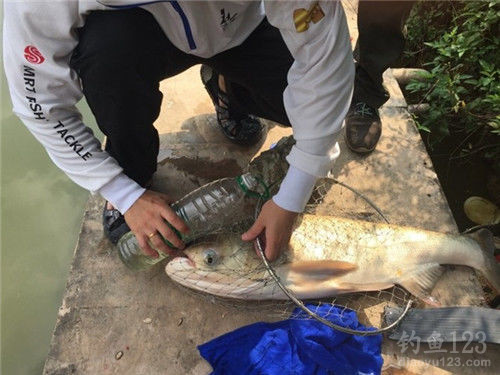
How to Rig and Bait for Catching Silver Carp and Bighead Carp: My 3-Year Fishing Journey
Let me tell you straight—fishing for silver carp and bighead carp (the dynamic duo of the carp world) isn’t just about throwing a line in the water and hoping for the best. I learned that the hard way… until a random old guy at the lake changed everything. Three years ago, I was fumbling around with random baits and a rig that made zero sense, and then this grandpa—let’s call him “Uncle Li” for fun—sauntered over, shook his head, and dropped some knowledge that turned my fishing game around. Now? I hit the water rain, shine, or even when the wind’s howling like a madman, and I almost always come home with a haul (or at least a good story). Let’s break down everything I’ve picked up—from the perfect spots to the secret rig tricks that make the carp go crazy.
First Stop: Picking the Right Fishing Spot (No, Your Local Pond Won’t Cut It)
Before we even talk about baits or rigs, you need to be in the right place. Silver carp and bighead carp love space—they’re not hanging out in tiny neighborhood ponds (unless it’s a massive one). Here’s my golden rule:
- Water depth: Minimum 2 meters (about 6.5 feet). These guys don’t like shallow water—they need room to swim and feed.
- Spot type: Reservoirs, lakes, or large ponds are your best bets. If it’s a square-shaped pond? Head straight for the corners—carp love hanging out there, especially if there’s some structure (like a tree or a drop-off).
- Bonus tip: Look for spots where the opposite bank has hills or trees. Why? Wind and weather mess with visibility, but those hills block some of the wind, making it easier to read your float (trust me, you’ll thank me later on windy days).
Last month, I hit a reservoir that was 3 meters deep with a corner spot near a small hill. Within 10 minutes of setting up, I had a bighead carp on the line—total win. Don’t skip this step; a bad spot = no fish, no matter how good your bait is.
Bait 101: Two Types of Bait (Yes, You Need Both)
Here’s where Uncle Li’s advice changed everything: you need two separate baits—one for chumming (chum bait) and one for actual fishing (hook bait). No mixing them up, no cutting corners. Let’s break down the recipe (and yes, I’ve tested this a million times):
Chum Bait (For Luring Them In)
Chum bait is all about smell and quick breakdown. You want it to dissolve fast in the water, creating a “cloud” that draws the carp in from miles away. Here’s how I make mine:
- Ingredients: I won’t give you my secret base mix (let’s just say it’s a mix of cornmeal, soybean meal, and a dash of something stinky—carp love stinky), but the key is the ratio.
- Water ratio: 1 part chum bait to 0.3–0.4 parts water. Mix it until it’s just sticky enough to hold together when you squeeze it, but falls apart within 10 seconds in the water. If it’s too wet, it’ll dissolve instantly; too dry, and it won’t break down enough.
Hook Bait (For Getting Them to Bite)
Hook bait is different—it needs to stay on the hook long enough for the carp to actually eat it, but still break down slowly to keep them interested. Here’s the ratio:
- Water ratio: 1 part hook bait to 0.5–0.6 parts water. This makes it a little denser than chum bait, so it holds its shape longer but still creates a slow mist in the water (carp go crazy for that mist).
Pro tip: Match the flavor! If your chum bait is garlic-scented, your hook bait should be too. Carp are creatures of habit—they’ll swim to the garlic cloud, so give them garlic on the hook. I once tried a strawberry chum with a cheese hook bait, and I got zero bites. Never again.

Rigging and Float Adjustment: The Float is Your BFF (Don’t Mess This Up)
Okay, let’s get to the nerdy part—float rigs. I’ve tried a million different floats, but here’s the setup that works for me (even in rough water):
Step 1: Adjust the Main Float (For Shallow Water)
First, if the water is less than 80 cm (about 2.5 feet) deep, start with your main float set to 13 eyes (that’s the number of little marks on the float). Wait—some people say to cut the float’s shoulder (the top part), but don’t do that unless you know exactly what you’re doing. If you cut too much, the float’s weight capacity (how much bait it can hold) gets thrown off, and your hook bait will sink too fast. Trust me, I learned this the hard way—once I cut a float too short, my bait was sinking like a rock, and I didn’t catch a single carp all day.
Here’s the test: After setting the float to 13 eyes, add a small ball of hook bait to the hook. The float should sink to 2 eyes when the bait is in the water. If it sinks more than that? Your bait is too big—pinch a little off. If it sinks less? Make the ball bigger. This is non-negotiable—getting the float to 2 eyes means the bait is at the perfect depth for the carp to find it.
Step 2: The Secret Weapon—The Sub-Float (For Double the Bait)
Now, here’s the trick Uncle Li taught me that no one else seems to use: a sub-float. The main float is for your main hook, but the sub-float lets you add a second hook with two small bait balls. Here’s how it works:
- Main float weight: 0.3 grams (holds one hook bait).
- Sub-float weight: 0.6 grams (holds two small hook baits—one on each hook).
Why two baits? Because carp are greedy—they’ll go for the second bait if they miss the first. I once used this setup and caught two bighead carp in 10 minutes—total game-changer.
Step 3: Finding the Fish Layer (They’re Not Always at the Top)
Silver carp and bighead carp are usually in the top 1/3 of the water column (that’s the first third from the surface). But sometimes, they’ll move deeper—especially in cold weather or if there’s a lot of noise. Here’s how to find them:
- Start shallow: Cast your line with the chum bait and let it sink to the top 1/3. Wait 5–10 seconds, then reel it in quickly (this is called “chumming”).
- Watch the float: When you cast, the float should stand up and sink 5–7 eyes before you reel it in. If it sinks more, your bait is too heavy; if less, too light.
- Move deeper if needed: If you’re not getting bites after 10–15 chum casts, move the float down 3–5 cm (about 1–2 inches). Repeat until you get a bite.
Last winter, I was fishing a lake where the carp were in the middle layer (1/2 the water depth) because it was cold. I moved my float down 10 cm, and boom—first cast, I had a silver carp on the line. Don’t be afraid to adjust!
Reading the Bite: When to Pull (And When to Wait)
Okay, you’ve got the right spot, the right bait, and the right rig—now what? You need to know when the carp are actually biting. Here’s my rule of thumb:
- Big bite (big drop on the float): Pull immediately! This is a carp taking the bait and swimming away. If you miss this bite, move the float down 3–5 cm (they might be feeding a little deeper).
- Small bite (tiny flick on the float): Wait for the second bite! Small bites are usually just the carp testing the bait. If you pull on the first small bite, you’ll miss. If you miss the second, move the float down 3–5 cm.
Pro tip: Ignore the small fish! If you’re getting tiny bites from minnow or other small fish, don’t pull. Those little guys will drive you crazy, but here’s the secret: when the small fish stop biting, the carp are here. I once sat through 20 minutes of minnow bites, and then suddenly—nothing. I waited 30 seconds, and the float dropped 5 eyes. I pulled, and it was a 10-pound bighead carp. Patience pays off!
Weather and Season Tips: Adapting to the Elements
Silver carp and bighead carp are tough, but they do change their habits with the weather. Here’s how to adapt:
Warm Weather (Spring, Summer, Early Fall)
Stick to the top 1/3 of the water. The carp are active and feeding near the surface. Keep your chum casts fast—10 casts in 5 minutes will draw them in quickly. I once fished in 30°C (86°F) heat, and the carp were so active that I caught 5 in an hour just by keeping the chum coming.
Cold Weather (Late Fall, Winter)
Move deeper—try the middle 1/2 of the water or even the bottom. The carp slow down in cold weather, so they’ll be closer to the bottom. Also, make your bait a little smellier (add a dash of garlic or anise oil) to attract them—they’re less likely to swim far for food.
Windy Days
Windy days can be tricky, but they’re not impossible. The hills I mentioned earlier will block some wind, so stick to those spots. Also, use a slightly heavier float—0.4 grams instead of 0.3—so it doesn’t get blown around too much. I once fished on a day with 20 km/h (12 mph) winds, and the heavier float made all the difference—I still caught 3 carp.
My Secret Hack: Fast Casting = More Fish
Here’s the last thing Uncle Li told me that I swear by: cast faster than everyone else. If you cast 10 times while the guy next to you casts 8, you’re 20% more likely to catch a fish. Why? Because you’re creating a bigger, more consistent chum cloud. The carp will swim to the spot where the bait is coming in the fastest. I once raced a guy next to me—he cast 8 times in 10 minutes, I cast 12. I caught 4 carp, he caught 1. Enough said.
Look, fishing for silver carp and bighead carp isn’t easy. You need strong arms (those carp fight hard!), patience (especially with small fish), and a cool head when the wind’s blowing or the sun’s beating down. But if you follow these tips—pick the right spot, use two baits, get the float right, read the bite, and cast fast—you’ll start catching them in no time. I’ve spent 3 years learning this stuff, and I still make mistakes (like cutting a float too short last month), but every mistake teaches me something new.
Next time you hit the water, give these tricks a try. And if you catch a big one? Tag me in your photos—I’d love to see it! Tight lines, and may your chum clouds be strong, your floats be steady, and your haul be huge.