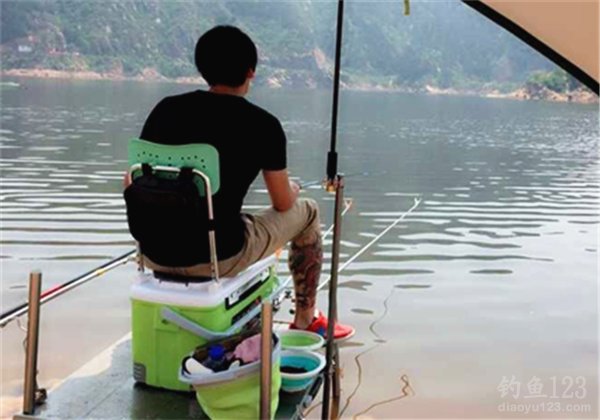
Wild Fishing Practical Experience Summary (Part 2): Float & Bait Secrets I Wish I Knew Earlier
Hey fellow anglers! If you read my last post Expert Angler-Recommended Wild Fishing Practical Experience Summary (Part 1), did you actually test those methods out on the water? In the first part, I rambled about rig setup, basic bait use, spot picking, and fighting fish. Today, let’s cut the small talk and dive into the stuff I didn’t cover—float selection and advanced bait hacks that changed my wild fishing game!
Float Selection: The Most Underrated Wild Fishing Skill
Let’s be real—how many of you just grab any old float from your tackle box and call it a day? Guilty as charged… until I lost a monster carp because my float was garbage. Floats aren’t just colorful sticks; they’re your direct line to what’s happening underwater. Get this wrong, and you’ll either miss bites or waste hours chasing false signals.
Size Matters: Big Floats vs. Small Floats
The first rule of float selection? Match the float size to your target and conditions:
- Big floats = big lead weights: These bad boys sink your bait fast—perfect for bottom fishing for monsters like carp or catfish. Bonus: They cut through small fish chaos! Nothing’s more annoying than tiny minnows stealing your bait before it hits the bottom, right? A big float skips that mess entirely.
- Small floats = hypersensitivity: Want to catch those finicky small fish (or even big ones in calm water)? Small floats pick up every little nibble. But fair warning—they’re also easily spooked by wind or current, so use them on quiet days.
Oh, and don’t forget float tail thickness! Thicker tails are easier to see from far away, but they deaden sensitivity. Thinner tails? You’ll spot the tiniest twitch, but good luck seeing them if the sun’s in your eyes. Balance, people—balance!

Stability: The Sweet Spot Between “Rock Solid” and “Jittery Mess”
Stability is where most anglers mess up. Let’s break it down simply:
- Good stability: When a fish bites, the float bounces but snaps back to normal fast. No waiting around—you know instantly if it’s a bite or just a ripple.
- Bad stability: Either the float goes haywire and takes 10 minutes to calm down (you’ll miss the bite!) or it’s so stiff that you can’t tell if a fish’s even near your bait. Total buzzkill.
Quick Float Science (No Boring Jargon, Promise)
Why do some floats stay steady while others act like they’re on a rollercoaster? It’s all about two points:
- Center of gravity (COG): The “heavy spot” of your float + lead + bait + line combined. Think of it like the bottom of a pendulum.
- Center of buoyancy (COB): The “floaty spot” where water pushes the float up. Like the top of a balloon.
Here’s the trick:
- If the float’s top half is big, COB is high. COG stays low (from the lead), so they’re far apart—this makes the float super stable (great for windy days or current).
- If the float’s top half is small, COB is low. COG and COB are close—this makes it hyper-sensitive (perfect for calm water and finicky fish).
- Pro tip: If your float won’t stand up straight? Either COG is higher than COB, or your weight’s off. Re-adjust that lead—stat!
Bait Hacks: Stop Wasting Bait and Start Catching Fish
You’ve got the perfect float—now let’s talk bait. I’ve wasted so much money on fancy baits that didn’t work. These are the lessons I learned the hard way:
Live Bait vs. Dough Bait: Know When to Use Which
Let’s settle the debate:
- Live bait (red worms, maggots): They’re sticky! Pair them with a little dip powder, and you’ll draw all the small fish to the middle/top of the water. Wait—why would you want that? Because it keeps them away from your bottom bait (hello, monster carp!). Genius, right?
- Dough bait: Do NOT use dip powder with this! I made this mistake once—spent an hour re-baiting every 30 seconds because tiny fish kept stealing it. Total waste of time (and bait!). Stick to plain dough bait if you want to avoid the small fish circus.
Hook Size + Bait = Success (Or Failure)
Here’s a common mistake: “Big fish = big hooks + big bait!” Wrong. I once used a giant hook with a massive dough ball… and caught nothing for 3 hours. Why? The fish couldn’t even fit the hook in their mouth!
For small fish (like crucian carp or minnows): Use tiny hooks with small dough bait pieces. You’ll get way more bites than if you use worms—trust me, I tested this!
Line Size: Seasonal Cheat Code
Line size isn’t one-size-fits-all. Follow this and thank me later:
- Spring: Fish are slow and groggy. Use 1.5–2.0 main line + 0.5–1.0 leader line. Thin enough to not scare them, strong enough to handle surprises.
- Summer/Fall: Fish are active (and bigger!). Step up to 2.0–3.0 main line + 1.5–2.0 leader line. You’ll need the strength for those fighting monsters!
And for the love of fishing—check your leader line! If it’s frayed or thin, replace it. I lost a 5-pound carp because my leader line was worn out. Cried a little (don’t judge).
Final Thoughts (From One Angler to Another)
Phew—that’s all the wild fishing wisdom I’ve got for now! Between floats and bait, these are the tips that turned me from a “catch nothing but seaweed” angler to someone who actually brings home dinner (or at least has stories to tell). Remember: No method is perfect—you’ve got to test, tweak, and laugh at your mistakes (we’ve all lost a big one to a bad float!).
Oh, and if you try any of these? Hit me up in the comments! I’d love to hear how it goes—whether you land a monster or accidentally hook your hat (we’ve all been there).
Tight lines, everyone—see you on the water!