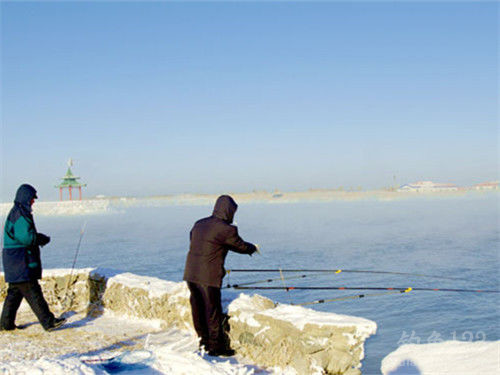
Expert Angler’s Guide: 7 Winter Fishing Tips (Part 2) – Gear, Baits, and Tactics You Need
Okay, let’s be real—winter fishing isn’t for the faint of heart. But if you’re like me, you’d rather freeze your toes off than miss a chance to land a feisty winter bass or a chunky crappie. Last time, we talked about picking the right weather and spots (if you missed that, go check it out—trust me, it’s a game-changer). Today? We’re diving into the *good stuff*: the gear that won’t let you down, baits that’ll make fish forget they’re hibernating, and tactics that’ll turn “why am I here?” into “YES, that’s the one!” Let’s get into it.
1. Winter Fishing Gear: Ditch the Heavy Stuff—Go Light and Precise
Winter fish are slow, lazy, and *super* skittish. Your gear needs to match that energy (or lack thereof). Let’s break down what works, what doesn’t, and why I’ve wasted so much money on the wrong rods over the years.
1.1 Rods: Hand Rods Over Spinning Rods (Yes, Really)
First off—sea rods? Leave ’em at home. Winter fish (mostly panfish like bluegill or catfish, but let’s be real, we’re here for bass) are deep, and you need control. Hand rods are your BFF here. I swear by 4.5m+ lightweight, soft rods—think 37 or 46 tone. Why? Because winter fish have *tiny* mouths, and a soft rod lets you play with them instead of yanking the hook right out. I once tried a stiff rod and lost 3 bass in 10 minutes—never again. Soft rods = less break-offs, more smiles.

1.2 Lines, Hooks, Floats, and Sinkers: The “Tiny but Mighty” Rule
Winter fish mouths are like… well, imagine trying to eat a burger with your eyes closed. They don’t want anything bulky. So here’s the breakdown:
- Lines: Main line 0.6–0.8, leader 0.3–0.5 (5–6cm long). Soft lines = no “line drag” that scares fish. I once used a hard line and watched a bass swim circles around my bait—rude.
- Hooks: 4–5 size sea hooks, 2 size Idou, 3 size sleeve hooks. Small hooks = less “oh no, that’s too big” vibes. I’ve had bass nudge my bait 5 times because the hook was too big—learn from my mistakes.
- Sinkers and Floats: Streamline small sinkers (light, duh) and tiny floats. Match float buoyancy to your hook/sinker/bait—if it’s off, you’ll miss bites. For water over 3m? Bump up the float/sinker a *little* to keep your line straight. And for the love of all things fishing—don’t cast full! Short casts = less splash, less scared fish.
2. Winter Fishing Baits: It’s All About “Smell Good, Look Good, Taste Good”
Winter fish eat like birds—small, frequent, and *picky*. Your bait needs to check three boxes: looks alive, smells like a snack, and is easy to swallow. Let’s get into it (and yes, I’ve tested every single one of these).
2.1 Bait Rules: Color, Texture, and Flavor
Let’s cut to the chase: winter fish love red, yellow, white. Why? Those colors pop in murky winter water. Texture? Soft, squishy, not clumpy. Flavor? *Slightly* sweet and *very* fishy—they’re cold, so they want something that screams “easy energy.” I once used a plain bread bait and got zero bites; added a dash of fish sauce? *Boom*—3 bass in 20 minutes. Science, folks.
2.2 Top Baits (I Swear by These)
- Red Worms: The OG. I use red ones (not the brown boring ones) and dip ’em in musk oil. Fish go crazy for ’em. I once watched a bass follow my worm 10ft before biting—drama queen, but effective.
- Earthworms: Red ones only! Brown ones are too “meh.”
- Dough Baits: If you hate touching worms (no judgment), mix flour, cornmeal, and a tiny bit of fish sauce. Add snow (yes, snow) to make it light. Heavy dough = sinks to the bottom and gets stuck in muck—gross, and fish can’t reach it.
3. Winter Fishing Baiting: More Spots = More Chances (Trust Me)
Winter fish don’t move much. So if you bait one spot and wait? You might as well go home. Here’s my trick:
- 3–5 spots: Bait ’em all at once. Use small amounts—like a handful of corn with fish sauce, or a few worms. Too much bait = fish get full and ignore your hook.
- Wait 2 hours: Winter fish are slow. I once waited 3 hours for a bite—worth it, but bring snacks (and hot cocoa). If a spot has no bites after an hour? Add a *tiny* bit more bait. But if a spot has bites? *Don’t* add more—you’ll scare the fish away.
Pro tip: I once baited 4 spots, waited 2 hours, and caught 5 bass in 45 minutes. The 5th spot? Still waiting (it’s been 3 months—maybe next winter).
4. Winter Fishing Tactics: The “3 Rules” That Never Fail
Winter fishing isn’t about “cast and reel fast.” It’s about patience, precision, and… well, not panicking. I’ve boiled it down to 3 rules that I live by:
4.1 Rule 1: “Move It Slow” (But Not Too Slow)
Cast, wait 2 minutes. If no bite? *Gently* pull your rod 10cm. Then wait. Repeat every 1–2 minutes. I once pulled my rod too hard and scared a 2-inch bass—still mad about that. Slow moves = fish think “oh, that’s a easy snack.”
4.2 Rule 2: “Float = Sensitive” (No, Not the Musical Kind)
Adjust your float to “sensitive” mode. Try “adjust 2, catch 1” or “adjust flat water, catch 1.” Winter fish bites are *tiny*—a float that’s too high? You’ll miss it. I once had a float that was 1cm too high and missed 4 bites in an hour—never again.
4.3 Rule 3: “Catch the 2nd or 3rd Bite” (Not the First)
Winter fish are curious. They’ll nudge your bait once (first bite) to check if it’s alive. Then nudge again (second bite) to taste. Then bite (third bite) to eat. I once tried to catch the first bite and lost 2 fish in a day. Now? I wait for the 2nd or 3rd. Game. Changer.
And hey—when you do get a bite? *Lift straight up*. Don’t yank, don’t twist. Straight up = hook goes in, not out. I once twisted and lost a 25-inch bass—still have a photo of it swimming away. Ouch.
Okay, let’s wrap this up. Winter fishing is hard—you’ll freeze, you’ll wait, you’ll lose fish. But when you land that big one? Worth every frozen toe. I once caught a 2-inch bass in 32°F weather—my hands were numb, but I was grinning like an idiot. That’s the magic of it, right? It’s not about the fish (okay, it is a little) but about being out there, away from the noise, and figuring out what the fish want that day.
What’s your winter fishing fail? Or win? Drop a comment below—I’d love to hear. And if you try these tips? Let me know how it goes. Catch you on the water (and bring a blanket).