Mastering the Tight-Line Technique: Your Must-Have Skill for River Fishing
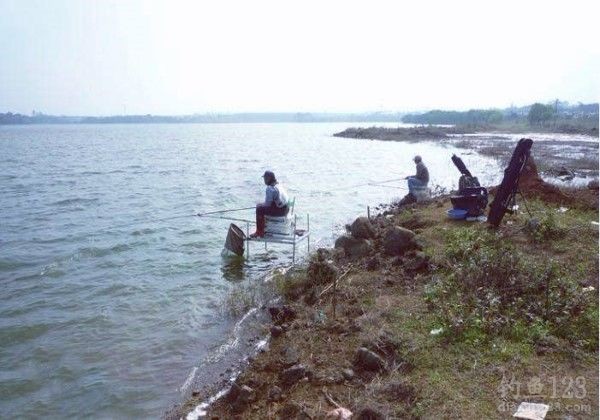
Let’s be real for a second. Finding a truly great fishing spot these days is like finding a needle in a haystack. Compared to just a few years ago, the struggle is real! I’ve personally driven across state lines, chasing rumors of pristine water, only to be let down or limited by that ever-present tyrant: the 9-to-5 job. These days, my adventures are a bit closer to home, sticking to a few local rivers where the primary catch is often the humble crucian carp. But hey, catching anything beats a skunk, right? It’s the perfect antidote to the workweek blues. Today, I want to dive deep into the fishing method that saves the day on these flowing waters: how to effectively use a tight-line, or “bent rod tip,” technique with your hand rod. I hope you fellow anglers find this gold!

Why the Tight-Line Technique is a River Game-Changer
Think back to when you first started fishing. Whether by choice or chance, we all began with different methods. Maybe it was chasing carp in commercial fisheries, competitive match fishing, or various traditional techniques. No matter the starting point, the goal was the same: to catch fish and have fun! But summer river fishing throws a major curveball: current. You can’t just plop your favorite lake rig in moving water and expect success. You absolutely must adapt your tackle and bait to the specific conditions of the wild river you’re fishing.
My First Taste of River Currents
I remember being a kid who couldn’t even name half the fish in the river, let alone identify them all. But seeing the adults fishing was all the inspiration I needed. My very first experience was with a local folk method popular in Sichuan, China. That region gets tons of rain and has crazy terrain, resulting in rivers with seriously fast flows. A float? Forget about it! It would just zip underwater or give hopelessly false signals. So, anglers there did something brilliantly simple: they ditched the float entirely. They’d just cast out their hand rod and let the current do its thing. My young eyes, sharp as a hawk’s back then, would be glued to the very tip of the rod. The current would put a gentle bend in it, and any bite would change that bend. You learned to read the rod tip like a book and set the hook based on feel and experience. It was pure, raw fishing instinct.
Big Fish Territory: Why Rivers Demand Respect
Here’s the key insight that makes river fishing so thrilling: fast water is a natural filter. Smaller fish simply can’t fight the constant push of a strong current. They get swept away or hide in the slowest pockets. The fish that hold in the main flow? They’re the bruisers. The ones with enough muscle and mass to stand their ground. This is where the saying “fast currents hold big fish” comes from. When you’re river fishing, you’re in big game territory. That means your gear needs to be up to the task. Don’t be shy with your line! Think 8-10 lb main line with a 4-6 lb leader, or even heavier like 12 lb main with an 8 lb leader if you’re targeting monsters. Patience is your ultimate virtue with the tight-line method. And when you finally get that bite, stay calm! A rushed hookset or sloppy fight in heavy current is the fastest way to turn a trophy into a “the one that got away” story.
Decoding the Rod Tip: Your Underwater Telegraph
Different fish bite in wildly different ways. For a beginner, it’s all just a “bite.” But an experienced angler can often guess the species just by the float’s dance. Without a float, your rod tip becomes your sole communication line. You have to become fluent in its language.
- The Tap-Dancer: If the rod tip gives a sharp, quick pull and immediately springs back, repeating erratically… that’s likely a small fish nipping at your bait. Think minnows or small chub.
- The Persistent Nudger: A series of distinct, repeated taps or a consistent, gentle pulling and releasing motion often signals a crucian carp or a similar bottom-feeder having a good chew.
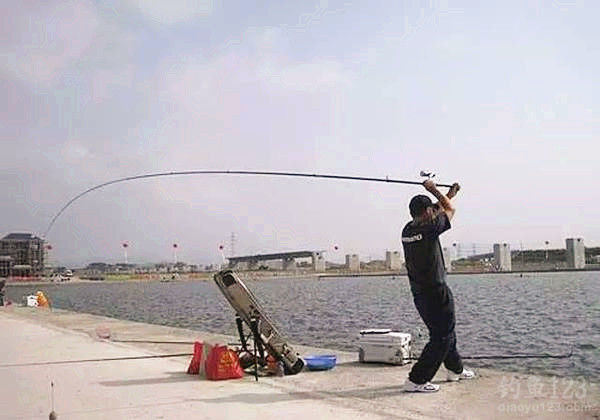
- The Steam Train: This is the moment you wait for. The rod tip slowly, deliberately, and powerfully bends over and stays bent. Don’t panic! This is classic big fish behavior—often a carp or a large barbel—that has taken the bait and is moving off. Get ready for a proper battle!
Gearing Up for Success: Bait and Tackle for Moving Water
As mentioned, river flow changes with the bottom structure and, crucially, with weather. After heavy rain, water funnels into the main channel, and the current can become a torrent. Your bait strategy needs to account for this aquatic treadmill.
Bait that Stays Put
The number one rule for river baiting: if it can be washed away, it will be. For summer fishing, your groundbait needs to be heavy and sticky. Use large, dense particles. A pro tip? Mix your groundbait with clay or silt from the riverbank itself. It adds weight, binds everything together, and creates a natural-looking cloud that won’t spook fish. If you’re pre-baiting a spot over days, you MUST consider water level changes. Choose your fishing spot wisely so a rising river doesn’t wash your expensive bait pile into the next county!
Hookbaits that Hold On
Your hookbait needs superglue-level attachment. Bulk it up! Increase the ratio of binder like wheat gluten or use specially designed sticky powders. Sometimes, simplicity is king. A juicy worm threaded on the hook or a durable corn kernel can outfish fancy mixes because they simply won’t fall off. The principle is straightforward: a bare hook catches nothing. Keep bait on the hook, and you keep hope alive.
The Heart of River Fishing: More Than Just a Technique
We’re lucky to have vast, diverse waterways. For every method I know, there are ten more out there, perfected by local anglers on their home rivers. The tight-line method is one essential tool in the river angler’s toolbox. It connects you directly to the river’s pulse, demanding focus, patience, and a feel for the water that modern float fishing sometimes glosses over.
So next time you’re staring at a rushing river, don’t turn around. Rig up heavy, bait up sticky, and focus on that rod tip. Feel the current through your line. Watch for that tell-tale pull. It’s a challenging, immersive, and incredibly rewarding way to fish. I’d love to hear about your own tight-line adventures and the monsters you’ve pulled from the flow!
Tight lines, and may your rod tip bend often!