Pro Anglers’ Ultimate Guide to Catching Silver Carp and Bighead Carp (Part 1)
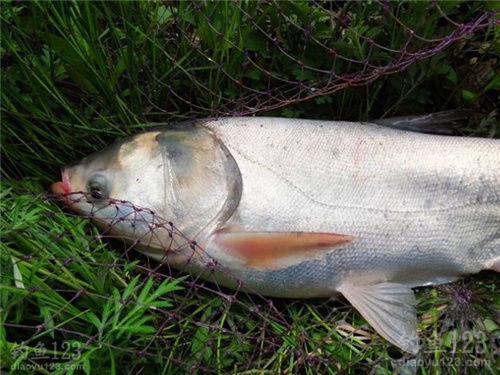
Let’s cut to the chase—silver carp and bighead carp (commonly lumped as “Asian carp” or just “silver bighead” in angling circles) are the ultimate freshwater fighters. These guys live in the middle and upper layers of lakes, ponds, and reservoirs, and they thrive in nutrient-rich waters (think murky, algae-choked spots—gross, but perfect for them). If you’ve ever struggled to land one, you’re not alone. I’ve spent hours reeling in nothing but tangled lines and broken hooks until I picked the brains of a few tournament pros. Today, we’re diving into the two biggest game-changers: tackle setups and prime fishing spots. Let’s get to it!

First Up: Tackle That Actually Works (No More Gear Failures)
Let’s be real—bad tackle is the #1 reason most anglers go home empty-handed. These carp are strong, fast, and have a knack for breaking stuff. Let’s break down every piece you need, from rods to hooks.
1. Rods: Short & Light = More Hooks, Less Arm Pain
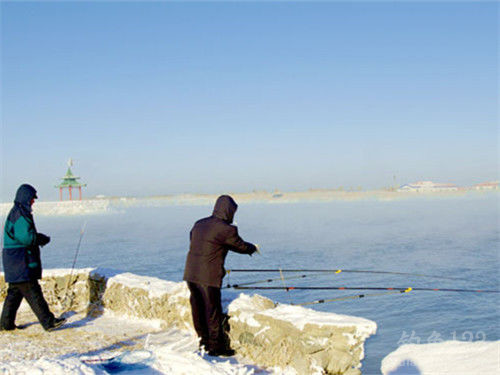
You might think “longer = better” for big fish, but wait—pro anglers swear by 3.6m to 7.2m rods, and here’s why: short rods = faster casts. If you’re fishing a small pond or black pit (that’s a pay-to-fish spot, for you newbies), a 3.6m rod is chef’s kiss. Yeah, it’s short and soft, so you’ll take longer to reel in a 10-pounder—but who cares? The goal here is to cast nonstop to draw the carp in. And hey, if you hook a monster? Toss the rod and grab your retractable safety rope (don’t leave home without this!). It’s saved my gear more times than I can count.
One non-negotiable: your rod must be light. If it feels like a cinder block, you’ll be begging for a break after 30 casts. Trust me—arm cramps are not a good look mid-tournament.
2. Line: Match the Size to the Fight (No More Snapped Lines)
Line is where most anglers mess up. Go too thin, and a 8-pounder will snap it like a twig. Go too thick, and the carp will see it and bolt. Here’s the pro breakdown:
- Main line: 2.5lb test for fish under 3kg (6.6lbs), 3lb test for 3–8kg (6.6–17.6lbs), 4lb test for 8–15kg (17.6–33lbs).
- Leader line: Ditch the regular stuff if you’re using 4lb main line. Go for 1.5lb uncoated braided line. It’s soft, so the carp won’t notice it, and it’s way less likely to snap. The only downside? It tangles like crazy if you’re not careful. Pro tip: Keep your casts smooth, not jerky.
- Leader length: Longer = more bites. I use 65cm (25.6 inches) every time. Does shorter work? Maybe, but I’ve never had a day where longer didn’t mean more fish in the net.
3. Hook Gap: The Secret to Avoiding “Anchor Fish” (You Know What I Mean)
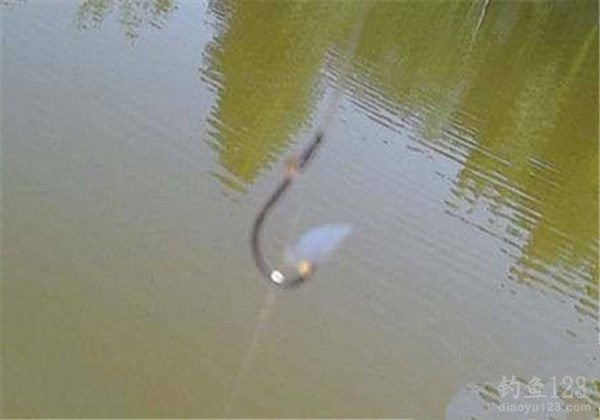
Hook gap—aka the distance between your two hooks— is the most debated topic in carp fishing. Some guys say “bigger gap = more bites,” others yell “smaller gap = no anchors!” (anchors are when you hook a fish in the side, not the mouth—total fluke).
Here’s the real tea: There’s no one-size-fits-all. The best way? Watch your bait’s cloud. When your bait hits the water, it’ll start to dissolve into a big, smelly cloud (that’s what draws the carp). The hook gap should be just enough so that both hooks sit in the thickest part of that cloud. And if you switch baits? Recalculate the gap. Different baits dissolve faster or slower—trust me, I’ve learned this the hard way (lost 3 big ones once because I forgot to adjust).
4. Floats: Long Tail = More Bites (No More Missing Intercepts)
Floats (or bobbers, if you’re old-school) are non-negotiable for these top-feeding carp. Here’s what the pros use:
- Size & shape: 15-eye long tail, 45–50cm (17.7–19.7 inches) long. Why? The long tail lets you “read” the water—you’ll see when a carp is nibbling at your bait before it takes it. Perfect for intercepts (when a carp swims through your bait cloud).
- Visual aids: If you’re using a long rod (6m+), get a flat-tipped float. Round tips are impossible to see from far away—you’ll end up staring at the water like a fool.
And hey—if you love your old float and it still catches fish? Keep using it! I’m not here to tell you to throw away your lucky gear. But if you’re struggling? Switch to the long-tail. You’ll thank me.
5. Hooks: Choose Based on Size (No More “Fish Off the Hook” Panic)
Hooks are where the rubber meets the road. Two big players: Kahle and Iseama (yes, those are the real names—don’t call them “the other hook”). Let’s break ’em down:
- Kahle hooks: Thin wire, straight tip, no barb. Pros: Super fast to hook—great for quick bites. Cons: Big fish will straighten ’em out (I’ve had a 10kg carp turn a 2/0 Kahle into a “C” shape). Not ideal for monsters.
- Iseama hooks: Thick wire, curved tip, slight barb. Pros: Once you hook ’em, they’re not getting away. No straightening, no slipping. Cons: A tiny bit slower to hook—you have to wait for the carp to fully take the bait. Worth it for big fish, though.
Size guide (pro-approved):
- 4–7kg (8.8–15.4lbs): 8–10 Iseama, 2/0 Kahle, or 6 Chinu (another Japanese hook—trust me, it works).
Next: Finding the “Sweet Spot” (Because Bad Spots = No Fish)
Here’s a hot take: Most anglers overcomplicate spots. Spots only matter when the conditions suck—like when it’s raining, the pressure’s dropping, or your bait is garbage. If the fish are biting left and right (high pressure, sunny day), you can fish anywhere and catch something. But when it’s tough? Spots are everything.
Wind = Your Best Friend (Or Worst Enemy)
Wind pushes the carp’s food (algae, plankton) to the downwind side of the water. So if it’s blowing south, fish the north shore. If it’s blowing east? West shore. That’s where the carp will be—chowing down on the free food.
But wait—if casting into the wind is impossible (I’ve been there—arm feels like it’s gonna fall off), pick the east or west shores. Just don’t fish the upwind side—you’ll waste 3 hours for zero bites.
No Wind? Go Deep & Steep
When the water’s dead calm, the carp go deep. Look for spots where the shore drops off fast (a “steep slope”). These spots have two things carp love: deep water (safe from predators) and easy access to the surface (for feeding). Avoid shallow, flat spots—carp hate ’em when it’s calm.
Wrapping Up (For Now)
That’s it for part 1! We covered tackle (rods, line, hooks, floats) and spots (windy vs. calm days). Next time, we’re diving into the real secret weapon: bait. I’m talking homemade recipes, how to make it dissolve just right, and the one trick that makes carp go crazy. Spoiler: It’s not just “smelly stuff.”
Got a favorite tackle hack or spot? Drop it in the comments—let’s help each other catch more bigheads! And if you try any of these tips, tag me on Instagram—I’d love to see your catches.