Why Do Fishing Baits from the Same Fishing Mall Yield Different Results? Let’s Break It Down!
Okay, let’s get real—we’ve all been there. You’re scrolling through your fishing group, and someone’s bragging about hauling in a monster bass with “the same exact bait combo” you bought from Fishing Mall. But when you tried it? Nada. Zilch. Not even a nibble. What gives? I mean, if it’s the same authentic bait (let’s stress that—Fishing Mall only sells real deals, no knockoffs), why the huge difference in success? Let’s spill the tea on this frustrating fishing mystery.
First off, let’s rule out the obvious: fake bait. If you’d grabbed a cheap knockoff from some random online shop, ingredients would be all over the place—so no comparison. But since we’re talking Fishing Mall baits (the real deal), we can focus on the user side of things. Because let’s be honest—most of us aren’t professional anglers. We grab a pack, mix it up, and hope for the best. But that’s where the mistakes happen. Let’s dive into the chaos.
The “Third Gear” Bait Debate: Why It’s Either a Hit or a Miss
Let’s use the most iconic combo ever—“Third Gear” (you know the one: Wild Blue Carp, 918, and Speed Attack). Ask 10 anglers about it, and you’ll get 10 different takes: “It’s magic for crucian!” “Total garbage—only small fish!” “Works in winter, dies in summer!” Wait, how can the same bait be so polarizing? Spoiler: It’s not the bait’s fault. It’s you (and me, let’s be fair).
Let’s look at some real-life examples. Last month, my buddy Jake used Third Gear and pulled in 12 carp in 3 hours. I tried the exact same packs that night—zero bites. I was fuming. Then I watched him mix it up… and realized I’d been doing everything wrong. Ugh. So let’s talk about the three big mistakes we all make (guilty as charged).
1. Bait Ratio: Stop Guessing—This Isn’t a Baking Show!
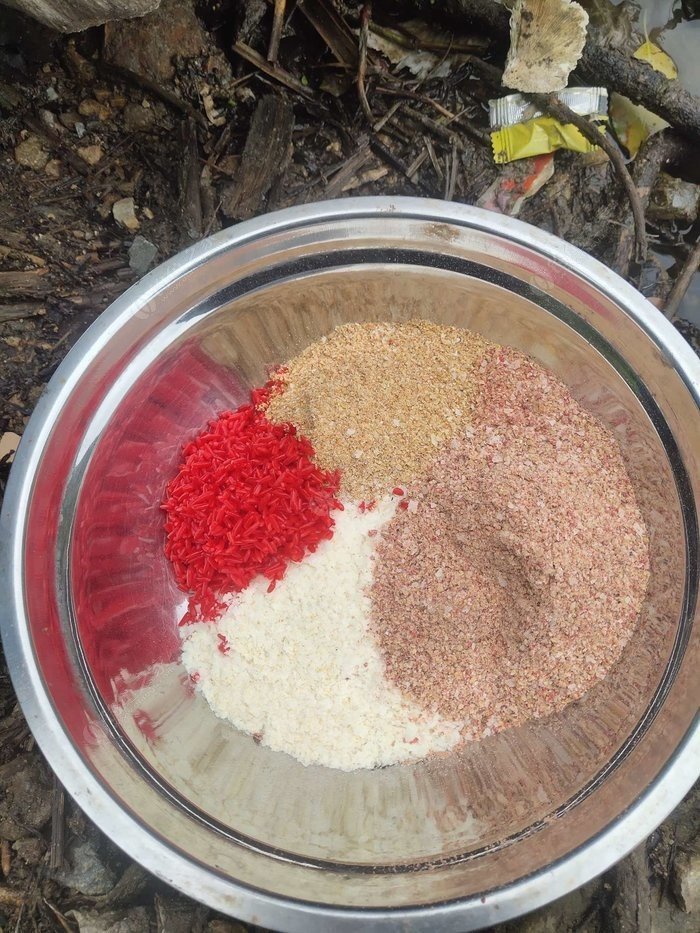
Okay, let’s start with the basics: Third Gear has three parts. Wild Blue and 918 are the main players (they’re the ones with the fish-attracting mojo). Speed Attack? That’s the sidekick—it adjusts the bait’s texture, not the flavor. So the “normal” ratio is 40% Wild Blue, 40% 918, 20% Speed Attack. But here’s the thing: normal doesn’t work for everyone.
Let’s take Jake vs. me. Jake was fishing in a shallow pond with small crucian. He adjusted his ratio to 30% Wild Blue, 30% 918, 40% Speed Attack—making the bait lighter and fluffier, so small fish could pick it up easily. Me? I used the normal ratio, which made the bait dense and heavy. By the time it hit the bottom, the small crucian were scared off, and the big carp weren’t interested. Duh!
Other times you need to tweak:
- Winter: Fish are sluggish—add more 918 (it’s sweeter, easier for cold fish to smell).
- Summer: Water’s warm, fish are active—bump up Wild Blue (stronger flavor to cut through algae).
- Deep water: More Speed Attack to make the bait float longer (so it doesn’t sink too fast and spook fish).
And here’s the worst mistake: some of us just dump in whatever. “Oh, I’ll just throw in a handful of each”—no, no, no! That’s like making coffee with 10 spoons of sugar. It’s either too strong, too weak, or totally off. Measure it. Use a small scale if you have to. Your future fish will thank you.

2. Mixing Steps: Stop Cutting Corners—This Isn’t a Race!
Okay, let’s be real: mixing bait is boring. So we skip steps. “I’ll just pour water in and stir”—no! That’s how you end up with a clumpy mess that falls off the hook. Let’s walk through the correct steps (and the mistakes we make):
Step 1: Know Your Bait Type (Pull vs. Rub)
First, decide: are you using pull bait (light, fluffy, for small fish) or rub bait (dense, sticky, for big fish)? The water ratio is totally different. Pull bait needs 1:1.2 (water to bait), rub bait needs 1:0.8. If you mix them up? Disaster. I once tried pull bait for big carp—by the time it hit the water, it was gone. Total waste.
Step 2: Don’t Skip the “Wake Up” Time
After adding water, you have to let the bait rest for 5-10 minutes. Why? The dry ingredients absorb the water evenly. If you stir it right away? Clumps. Dry spots. And when you put it on the hook? It falls apart. I’ve done this—stirred immediately, ended up with a mushy mess that wouldn’t stay on the hook. Embarrassing.
Step 3: Stop Adding More Bait/Water Mid-Mix
“Oh, it’s too dry—add more water!” “Too wet—add more bait!” No! That’s how you get a Frankenstein bait. If it’s too dry, add a tiny splash of water. Too wet? Let it sit for 5 more minutes. Don’t overcomplicate it. I once added three extra scoops of bait to a wet mix—ended up with a rock-hard clump that even a catfish wouldn’t touch.


3. Using the Bait: Stop Ignoring Your Environment!
Okay, you mixed it perfectly. Ratio’s on point. Texture’s perfect. But then you throw it in the water… and nothing. Why? Because you didn’t think about where you’re fishing. Let’s talk about the dumb mistakes we make here:
Mistake A: Wrong Bait Size for Depth
Deep water (10+ feet)? You need a big, dense bait—otherwise, it’ll get carried away by the current or dissolve before hitting the bottom. Shallow water (2-3 feet)? Small, fluffy bait—big bait will spook small fish. I once used a tiny pull bait in 12-foot water—by the time it hit the bottom, it was gone. Duh!
Mistake B: Wrong Bait for Wind/Waves
Windy day? Waves are big? Use rub bait—it’s sticky, so it stays on the hook. Pull bait will dissolve in 2 seconds. I learned this the hard way: last summer, I fished on a windy day with pull bait. Every cast, the bait was gone before it hit the water. I ended up going home empty-handed.
Mistake C: Wrong Bait for Fish Size
Small fish (sunfish, minnow)? Use pull bait—they can’t eat big rub bait. Big fish (carp, bass)? Use rub bait—small pull bait will just make them laugh. I once used a tiny pull bait for a 20-pound carp—he sniffed it and swam away. Rude.


Final Thought: It’s Not the Bait—It’s You (And That’s Okay!)
Let’s be honest: we all make these mistakes. I’ve done all three—bad ratio, bad mixing, bad usage. But once I fixed them? My fish count went up so much. Last week, I used Third Gear with a winter-adjusted ratio (35% Wild Blue, 45% 918, 20% Speed Attack), mixed it as pull bait (1:1.2 ratio), and fished in a shallow pond. I pulled in 8 crucian in 2 hours. Jake was impressed—finally!
And hey—fishing is supposed to be fun, not a chore. Don’t get mad if you mess up. Just adjust, try again, and laugh at the mistakes. Oh, and one last thing: let’s be responsible. Catch what you need, release the rest. And pick up your trash—no one wants to fish in a garbage dump. Come on, guys.
So next time you grab that Fishing Mall bait? Slow down. Measure the ratio. Mix it right. Think about your environment. And then? Go catch some fish. Let me know how it goes—tag me in your photos! I’d love to see your haul.